
.avif)
The IRS hasn't announced the 2027 standard mileage rate yet.
If history is any guide, that announcement will likely arrive sometime in December 2026 before taking effect on January 1, 2027.
Until then, employers, finance and HR teams, and employees who drive for work are left asking the same question:
Will the mileage rate go up again?
The honest answer is that no one knows yet. But we do know how the IRS calculates the rate, what drove the unusual mid-year increase in 2026, and what history tells us about where the rate could go next.
When Will the 2027 IRS Mileage Rate Be Announced?
While the exact announcement date varies, most organizations can expect the 2027 standard mileage rate to be released in late December 2026, taking effect on January 1st..
This gives employers time to update reimbursement policies, payroll systems, and expense platforms before the new year begins.
The 2027 IRS Mileage Rate Hasn't Been Released Yet
As of today, the IRS has not announced the 2027 standard mileage rate. That means any articles claiming to know the exact rate are simply making predictions.
While it's natural to wonder whether the rate will increase again, the IRS doesn't determine the mileage rate based on forecasts or inflation alone.
Instead, it reviews recent vehicle ownership and operating cost data before making a decision.
How Does the IRS Calculate the Standard Mileage Rate?
The IRS standard mileage rate is designed to estimate the average cost of driving a personal vehicle for business use.
The IRS bases the standard mileage rate on nationwide vehicle ownership and operating costs using data from an independent cost study.
Those costs include the nationwide averages for:
- Fuel
- Insurance
- Maintenance and repairs
- Tires
- Registration and licensing
- Depreciation
- Financing costs
Fuel is often the most visible cost, but depreciation, insurance, financing, and maintenance typically make up a much larger share of the total cost of vehicle ownership.
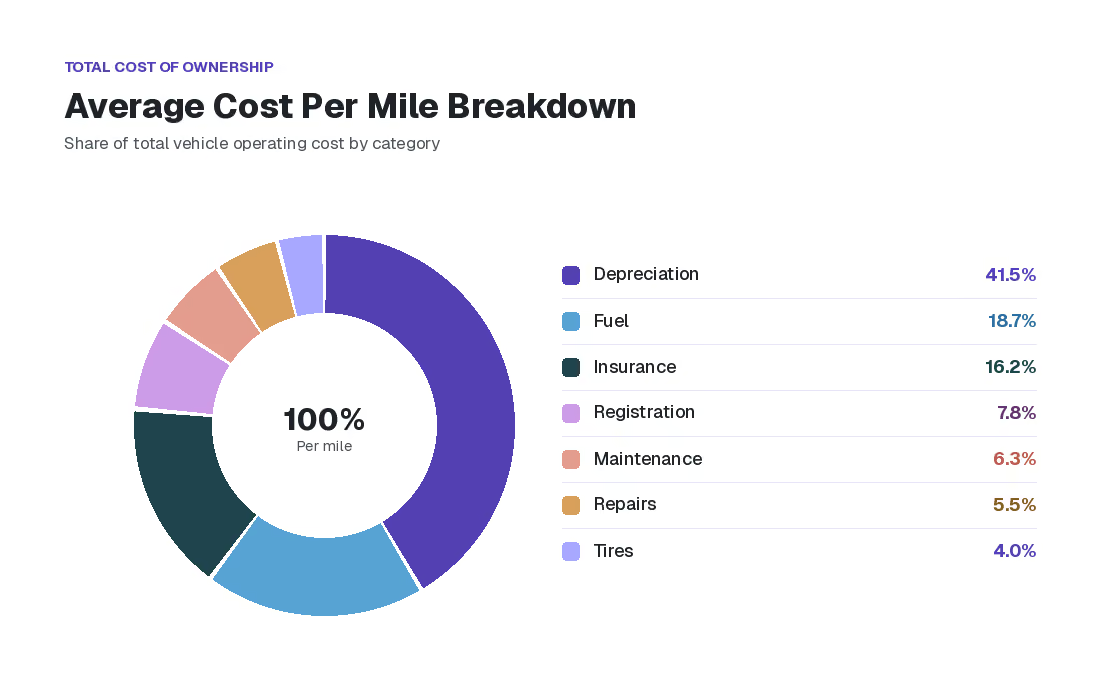
The goal isn't to perfectly reimburse every employee driver. It's to create a single national benchmark that reflects average driving costs across the country and sets the tax-free threshold.
The IRS publishes one national mileage rate because it's intended to provide a simple, broadly applicable per mile benchmark rather than a customized reimbursement for every driver. Individual vehicle costs vary significantly by geography, vehicle type, and annual mileage.
Because it's a national average, the IRS rate doesn't account for differences in local fuel prices, insurance premiums, vehicle ownership costs, or how much an employee actually drives.
That's one reason some employers choose other tax-compliant reimbursement programs that account for employee location, business mileage, or other cost differences instead of relying exclusively on a single national mileage rate.
Why 2026 Was Different
The biggest development this year wasn't the January rate. It was what happened six months later.
Effective July 1, 2026, the IRS increased the standard business mileage rate from 72.5 cents per mile to 76 cents per mile, marking one of the few mid-year adjustments in the program's history.
According to the IRS, the adjustment reflected recent increases in national vehicle ownership and operating costs.
Mid-year changes are relatively uncommon. Most years, the IRS announces one rate in December and leaves it unchanged for the entire calendar year.
The 2026 adjustment served as a reminder that the IRS can revise the rate when driving costs change significantly.
How Often Does the IRS Change the Mileage Rate Mid-Year?
Not very often. Since the standard mileage rate was introduced, mid-year changes have been the exception rather than the rule.
Considering the IRS has published mileage rates for decades, only a handful of mid-year adjustments have occurred.
Does a Mid-Year Increase Usually Mean Another Increase in January?
Not necessarily. Looking at previous mid-year adjustments, there's no consistent pattern.
After the 2005 increase, the IRS reduced the mileage rate the following January. The same thing happened after the 2008 increase.
On the other hand, the rate continued to rise following the mid-year increases in both 2011 and 2022.
In other words, a mid-year increase doesn't automatically signal another increase in January.
The IRS adjusts the standard mileage rate based on the current cost of owning and operating a vehicle, and those costs are influenced by constantly changing market conditions.
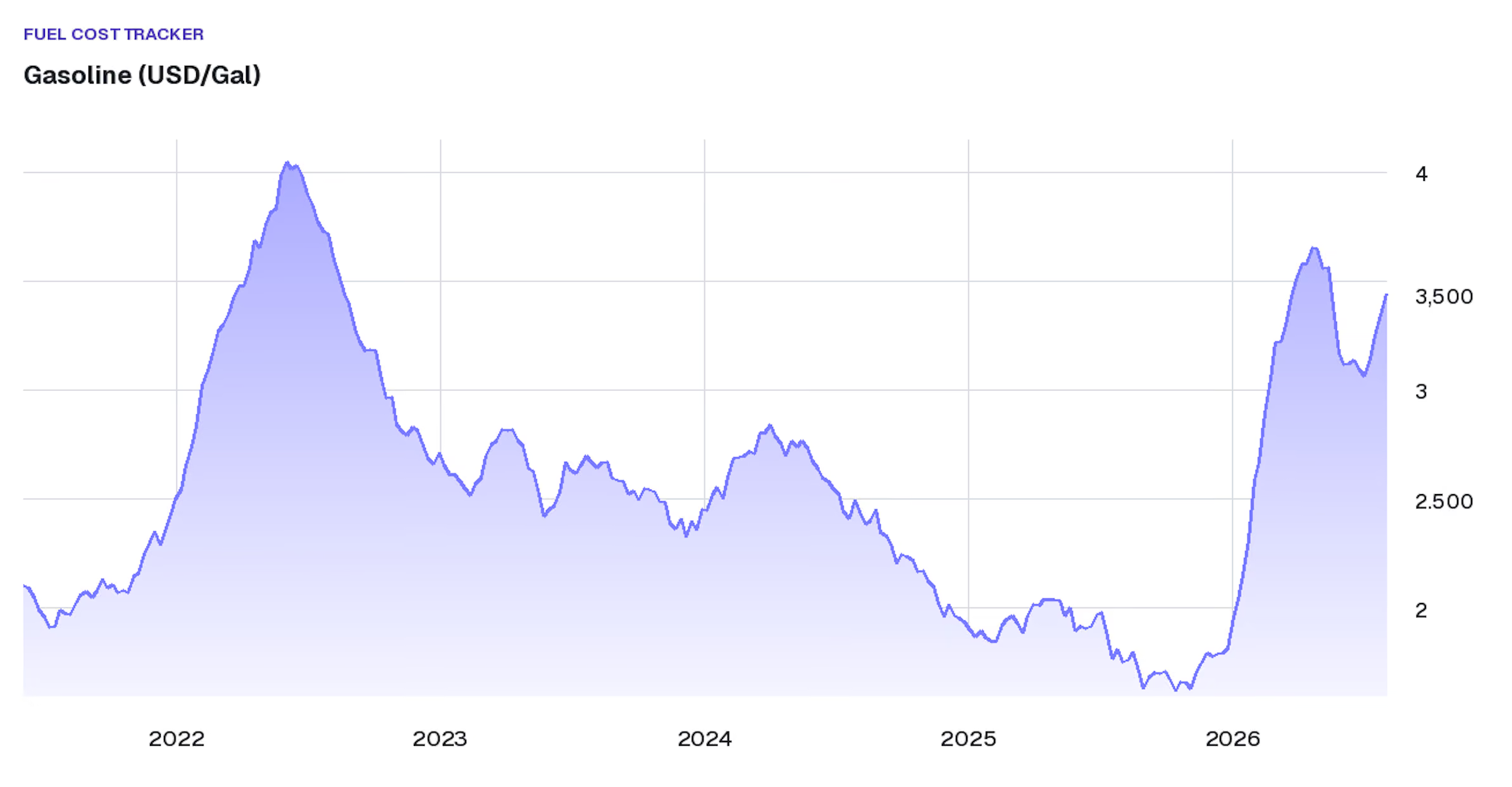
A look at gasoline prices over the past five years shows just how volatile driving costs can be.
Rather than moving in a straight line, prices have experienced sharp peaks and valleys in response to global conflicts, supply chain disruptions, refinery outages, tariffs, seasonal demand, and broader economic conditions.
Because fuel is one of the largest components of the cost of driving, these fluctuations can have a meaningful impact on the IRS mileage rate. If those cost pressures ease, the rate could stabilize or even decline.
If they persist, the IRS may increase the rate again. Ultimately, each annual adjustment reflects the IRS's assessment of vehicle ownership and operating costs at that point in time.
What Could Influence the 2027 Mileage Rate?
Several factors will likely influence the IRS's decision. Fuel price volatility is always one piece of the equation, but it isn't the only one.
The IRS also considers broader vehicle ownership costs, including:
- Insurance premiums
- Vehicle depreciation
- Maintenance and repair costs
- Financing costs
- Tire prices
- Registration and licensing expenses
Many of these costs are shaped by broader economic conditions. Global events, trade policies, supply chain disruptions, and geopolitical conflicts can all affect the price of driving.
For example, conflicts involving major oil-producing regions can push fuel prices higher, while tariffs or supply chain disruptions can increase the cost of vehicle parts, tires, and repairs.
Interest rate changes can influence vehicle financing costs, and rising insurance claims or repair expenses can drive insurance premiums higher.
In recent years, insurance and financing costs have increased significantly, alongside other ownership expenses.
That means even if gasoline prices remain relatively stable, increases in these other ownership costs could still influence the 2027 mileage rate.
Ultimately, the IRS looks at the total cost of operating a vehicle, not just the price at the pump. That broader approach is why the mileage rate can change even during periods when fuel prices appear relatively steady.
What Should You Do While Waiting for the 2027 Mileage Rate?
You don't need to wait for the IRS to announce the 2027 mileage rate before evaluating your mileage reimbursement program.
In fact, this is a good opportunity to step back and consider if your current approach, whether it's a Cents-Per-Mile (CPM), Fixed and Variable Rate (FAVR), or Tax-Free Car Allowance (TFCA) program, still reflects the way your employees actually drive.
The IRS rate is a useful tax-free benchmark, but it’s a single national average. It works best for casual drivers who log fewer than 5,000 business miles a year.
Once employees start driving more than that, the standard rate doesn’t scale well with how vehicle costs actually work.
That’s because traditional CPM reimbursement roll every driving expense into one average per-mile rate, including both fixed costs, like insurance and depreciation, and variable costs, like gas and maintenance.
The more an employee drives, the more they’re reimbursed for fixed costs that don’t actually increase with mileage.
That means the IRS rate alone can’t tell you whether your reimbursement program is fair, compliant, or financially sustainable.
For many organizations, the bigger opportunity isn't simply changing reimbursement rates each January.
It's making sure employees are in the reimbursement program that best fits their role, annual mileage, and business driving requirements.
Don't Just Update Your Rate—Review Your Strategy
As you prepare for the new year, consider questions like:
- Are your reimbursement costs increasing because employees are driving more, because vehicle ownership costs are rising, or both?
- Do employees in different regions face meaningfully different costs to own and operate a vehicle?
- Are high-mileage employees still in the reimbursement program that's best suited to their driving patterns?
- Are you using one reimbursement method for everyone when different roles may require different approaches?
- Is a single national reimbursement rate resulting in overpayments for some employees and underpayments for others?
The answers can help you determine whether simply updating your reimbursement rate is enough, or whether it's time to take a broader look at your mobility strategy.
A one-size-fits-all reimbursement approach is easy to administer, but it doesn't always reflect how employees actually drive or the costs they incur.
Regularly reviewing program fit can improve fairness, support compliance, and help control reimbursement costs over time.
By asking these questions now, you'll be in a much better position to respond when the IRS announces the 2027 mileage rate.
Whether the rate goes up, down, or stays the same, you'll already understand how the change affects your business and whether any adjustments are actually needed.

Looking Ahead to the 2027 IRS Standard Mileage Rate
The 2027 IRS standard mileage rate hasn't been announced yet, and it's too early to make a prediction around whether it will increase, decrease, or remain unchanged.
What history does tell us is that the IRS bases its decision on real-world vehicle ownership and operating costs, not on a predetermined formula or a simple inflation adjustment.
Once the IRS publishes the 2027 standard mileage rate, employers should evaluate what the change means for their reimbursement program, rather than simply updating a reimbursement rate.
For organizations looking beyond a single national mileage rate, benchmarking reimbursement costs by employee role, mileage, and geography can provide a much clearer picture of whether their program remains accurate, fair, and cost-effective.
Want to evaluate how your program compares?
Our 2026 Mileage Reimbursement Benchmark Report benchmarks reimbursement costs by role, geography, mileage, and reimbursement method using anonymized data from thousands of U.S. drivers.
Talk to Cardata

.jpg)
.jpg)
.jpg)
