Cents-Per-Mile (CPM)
See if CPM is Right for Your Team
Cents-Per-Mile (CPM) is a simple, IRS-aligned program that reimburses employees tax-free at a flat rate for every business mile they drive.

A Simple, Tax-Free Way to Reimburse Business Mileage
We design and manage your Cents-Per-Mile (CPM) program from start to finish. Drivers are reimbursed a simple, flat amount for every business mile they drive, usually aligned with the current IRS Standard Rate.

Why Organizations Choose Cardata for CPM
CPM is simple when mileage is tracked and documented properly.
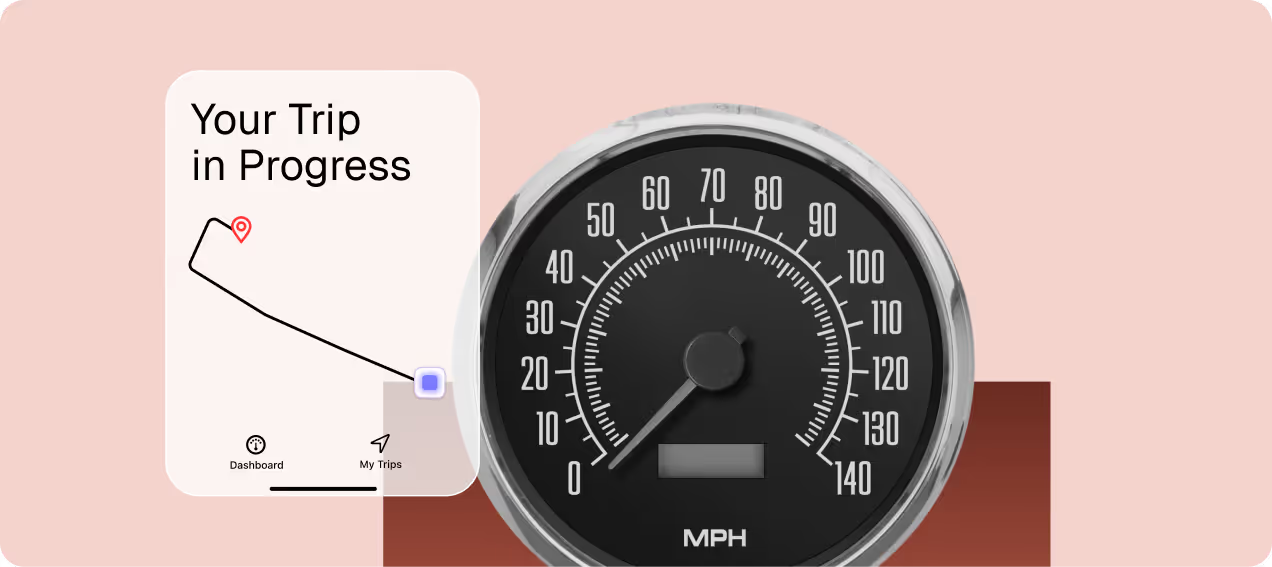
Based on Reliable Mileage Data
Companies can use the IRS standard mileage rate, set their own internal rate, or build data-backed CPM rates using real regional driving costs. This flexibility allows organizations to tailor CPM rates to their drivers while keeping reimbursements aligned with the real cost of driving.

100% Tax-Free, Fully Managed
When reimbursements stay at or below the IRS standard mileage rate and drivers log their business miles, payments remain tax-free. Proper documentation and mileage records help maintain compliance and keep reimbursements audit-ready.

Simple to Oversee
CPM is one of the simplest reimbursement programs to run. Drivers simply log business mileage, and their reimbursement is calculated based on the mileage driven. Clear documentation keeps the program straightforward and tax compliant.

Better Tracking, Better Cost Control
CPM works best when mileage is tracked correctly. Manual logs and estimates can lead to overpayments and audit risk. Automated mileage capture helps ensure reimbursements reflect real business miles driven, no more and no less.
Talk to a CPM Expert
Technology That Powers Your CPM Program
Cardata combines hands-on program support with purpose-built technology to make administration easier and help keep everything compliant.
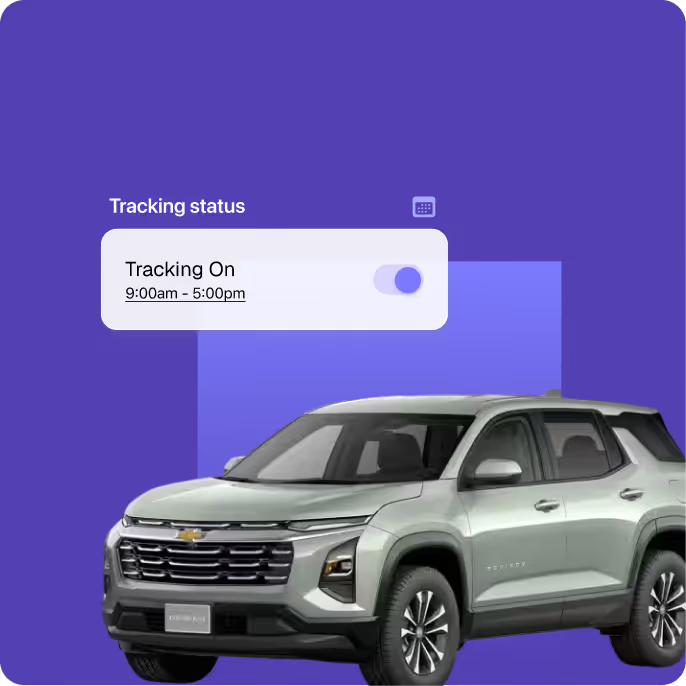
Track
Drivers capture business mileage automatically through Cardata Mobile, generating defensible trip records with start and end points, dates, and mileage totals.

Safeguard
Mileage logs are structured to meet IRS accountable plan requirements. Clear documentation standards help protect the tax-free treatment of reimbursements.

Approve
Administrators manage oversight with dashboards, reporting tools, and clear approval workflows that provide full visibility into mileage trends and reimbursement totals.
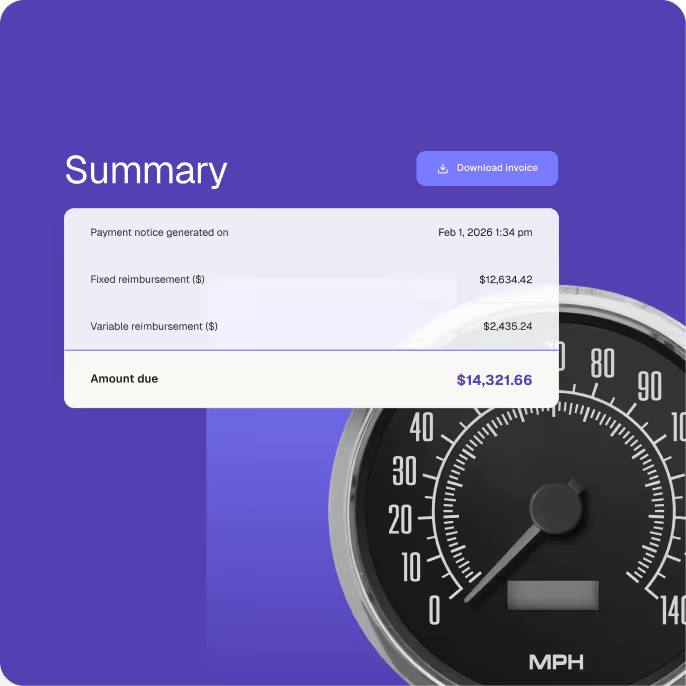
Pay
Reimbursements are issued through secure direct-to-driver reimbursements, separated from payroll to preserve tax treatment and reduce administrative burden.

Integrate
Cardata fits into your existing finance and HR workflows, delivering audit-ready reporting and clean data that supports budgeting and forecasting.
Drivers capture business mileage automatically through Cardata Mobile, generating defensible trip records with start and end points, dates, and mileage totals.
Mileage logs are structured to meet IRS accountable plan requirements. Clear documentation standards help protect the tax-free treatment of reimbursements.
Administrators manage oversight with dashboards, reporting tools, and clear approval workflows that provide full visibility into mileage trends and reimbursement totals.
Reimbursements are issued through secure direct-to-driver reimbursements, separated from payroll to preserve tax treatment and reduce administrative burden.
Cardata fits into your existing finance and HR workflows, delivering audit-ready reporting and clean data that supports budgeting and forecasting.






What Makes Cardata Different
CPM is widely used. But how your program is built, supported, and optimized makes the difference between basic reimbursement and a strategic advantage.



Considering CPM for Your Team?
See how a fully managed, IRS-aligned CPM program can make reimbursements easier to run, keep everything compliant, and pay employees tax-free for the miles they drive for work.
Explore more
.avif)
.jpg)

FAQs
How does CPM compare to a car allowance?
When is CPM a better fit than Fixed and Variable Rate (FAVR)?
Can CPM reduce company costs?
Does CPM require complex compliance rules?
Can CPM and other reimbursement models be used together?
