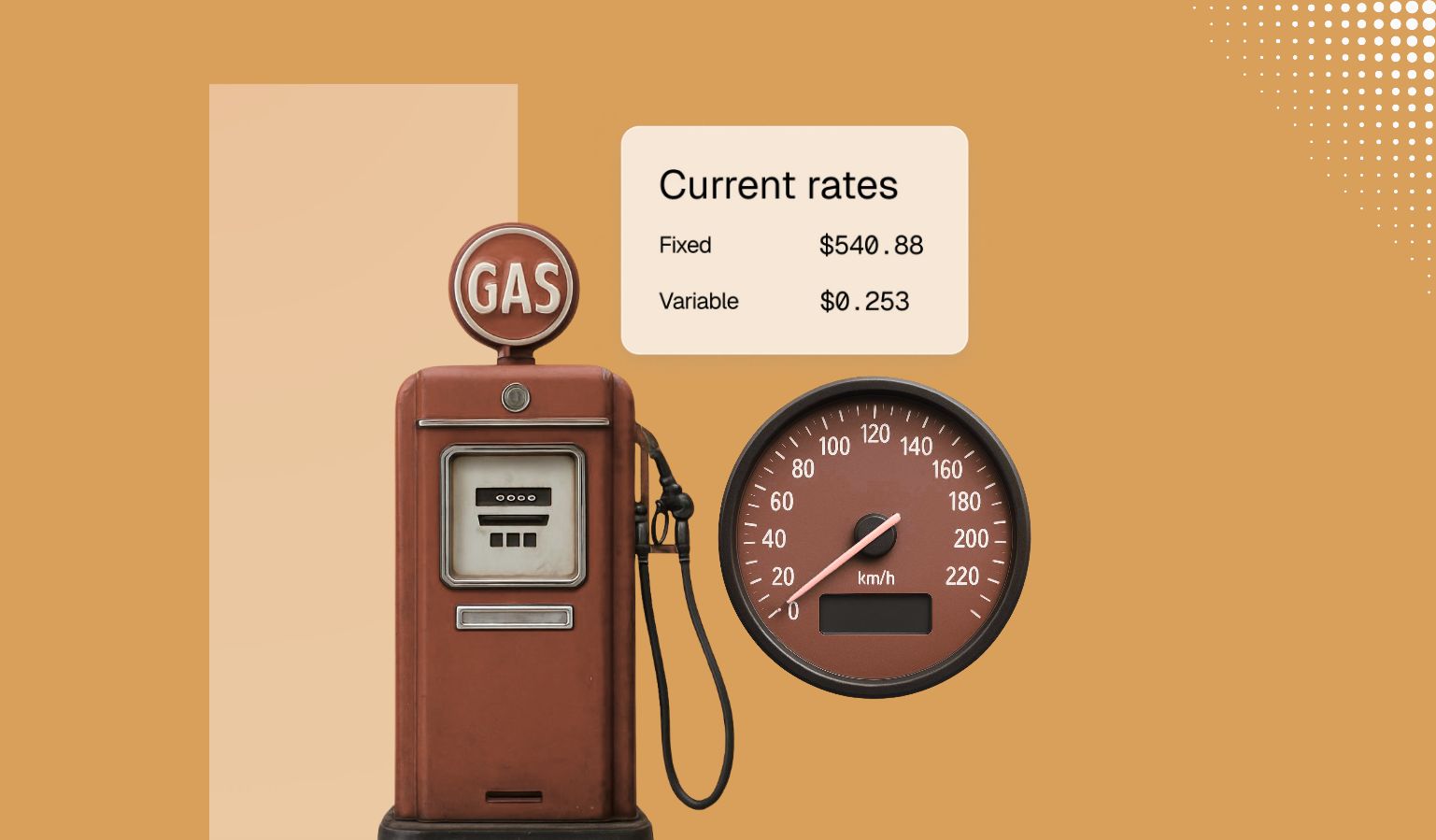

Gas cards (also known as fuel cards) can make paying for business fuel easier. Instead of asking employees to pay out of pocket and submit receipts later, a company can give drivers a card specifically for fuel purchases.
The challenge is that convenience does not automatically create control.
Without clear policies and reliable records, finance teams can have a hard time determining whether fuel purchases are reasonable, connected to business driving, and properly accounted for.
Personal purchases, missing receipts, unusual transactions, and changing fuel prices can all make a seemingly simple gas card program harder to manage.
Effective gas card expense management comes down to a few fundamentals: clear rules, appropriate spending controls, good records, regular monitoring, and a process employees can realistically follow.
Here is how finance teams can put those pieces together.
What Is Employee Gas Card Expense Management?
Employee gas card expense management is the process a company uses to control, document, review, and reconcile fuel purchases made by employees for business purposes.
For finance teams, that means knowing more than the total amount spent on fuel.
Ideally, the organization should also be able to understand who made a purchase, when and where it happened, whether it was connected to business activity, and whether it followed company policy.
That visibility becomes especially important when employees use vehicles for both business and personal driving.
1. Start With a Clear Gas Card Policy
A written fuel card policy gives employees and finance teams the same set of rules to work from.
The policy should explain who is eligible for a card, which vehicles it can be used for, what employees are allowed to purchase, and what documentation they need to provide.
For example, a company might specify that a gas card can only be used to purchase fuel for an approved vehicle while the employee is driving for work.
It can also explain whether car washes, convenience-store purchases, premium fuel, or other expenses are permitted.
The policy should address personal use as well. That distinction matters for both cost control and tax reporting.
Under IRS Publication 15-B, Employer's Tax Guide to Fringe Benefits, fringe benefits are generally taxable unless a specific exclusion applies.
IRS guidance also distinguishes between business and personal vehicle use and includes specific rules for valuing employer-provided fuel and personal vehicle use.
A policy does not need to read like a tax manual. Employees simply need to understand what the card is for, what records they need to keep, and what happens when a purchase falls outside the rules.
2. Set Spending Controls That Match How Employees Drive
Gas card limits work best when they reflect actual business needs.
A field employee driving hundreds of business miles each week will probably need different limits from an employee who occasionally drives to a customer meeting.
Applying exactly the same limit to both can either create unnecessary restrictions or leave more room for spending than necessary.
Depending on the fuel card provider, companies may be able to establish controls around factors such as:
- Transaction amounts and frequency
- Approved merchant or purchase categories
- Daily or weekly spending
- Driver or vehicle identification
Limits should also be reviewed periodically.
Fuel costs change, territories change, and employees may move into different roles. A limit that made sense a year ago may no longer reflect what a driver reasonably needs today.
This became particularly relevant in 2026. The IRS initially set its optional business standard mileage rate at 72.5 cents per mile for January through June.
Effective July 1, 2026, the IRS increased the rate to 76 cents per mile, citing recent increases in fuel prices as the reason for the midyear adjustment.
While the IRS mileage rate is not a gas card spending limit, the unusual midyear change is a useful reminder that driving costs can move quickly.
3. Connect Fuel Purchases to Business Driving
One of the biggest limitations of reviewing fuel transactions on their own is that a receipt tells finance what someone purchased, but not necessarily why.
Mileage records provide important context.
For example, a fuel purchase might initially look high. If the employee drove significantly more business miles that week, the expense may be entirely reasonable. On the other hand, repeated fuel purchases paired with very little recorded business mileage may deserve a closer look.
Good mileage records also matter for tax compliance.
IRS Publication 463, Travel, Gift, and Car Expenses explains the recordkeeping requirements associated with business vehicle expenses.
For reimbursements under an accountable plan, expenses need a business connection, employees need to adequately account for them within a reasonable period, and excess reimbursements generally need to be returned within a reasonable period.
In practice, finance teams should have a consistent way to connect business mileage with vehicle expenses rather than relying on estimates at the end of the month.
Mileage tracking software can make this easier by creating a more consistent record of business trips and reducing dependence on handwritten mileage logs.
4. Monitor Transactions and Review Exceptions
Finance teams do not necessarily need to manually inspect every fuel transaction with the same level of scrutiny.
A more practical approach is to identify exceptions.
That might include purchases that are unusually large, repeated transactions over a short period, purchases outside expected working patterns, or spending that does not appear consistent with recorded business mileage.
Automated alerts can make this process easier when the gas card provider supports them.
Rather than discovering an unusual transaction during a month-end reconciliation, finance may be able to review it shortly after it occurs.
Regular reconciliation is still important. Gas card statements, receipts, mileage records, and other supporting information should tell a reasonably consistent story.
The goal is not to assume that every unusual purchase is fraud.
There are plenty of legitimate reasons for expenses to vary. Exception monitoring simply gives finance teams a practical way to focus their attention where it is most useful.
5. Make Recordkeeping Easy for Employees
A gas card process can look great on paper and still create problems if it requires too much manual work.
Employees are much more likely to follow a process that is simple and clearly explained.
Digital receipts, mobile expense tools, and automatic mileage tracking can reduce the amount of information employees have to remember or enter manually.
Finance teams benefit too because standardized records are easier to review than a mixture of paper receipts, spreadsheets, emails, and handwritten mileage logs.
Training matters here.
When a driver receives a gas card, explain what the card covers, how business and personal driving should be handled, what records are required, and who to contact with questions.
Refresher training can also help when company policies or systems change. And remember, clear expectations usually work better than relying on employees to figure out the rules themselves.
6. Review Whether Gas Cards Still Fit the Business
Gas cards can be useful, particularly when a company operates vehicles that require employees to purchase fuel as part of their jobs.
But they are not automatically the right answer for every workforce.
If employees use personal vehicles for work, paying for fuel addresses only one part of what it costs them to drive.
Employees also take on expenses such as insurance, maintenance, tires, depreciation, registration, and other ownership costs.
That can leave finance teams managing fuel separately while still needing another method to address the rest of an employee's business-related vehicle expenses.
It is worth periodically reviewing the bigger picture:
Does the current vehicle program accurately reflect how employees drive for work, and can the company clearly account for what it is paying?
That question can help finance teams decide whether to improve their existing gas card controls or consider a different approach.
Gas Cards vs. Mileage Reimbursement
For organizations with employees driving their own vehicles for work, mileage reimbursement is one alternative.
Rather than providing fuel separately, a mileage reimbursement program reimburses drivers for the real, business-required costs of owning and operating a personal vehicle for work.
One option is Cents-Per-Mile (CPM) reimbursement.
Employers reimburse employees according to their documented business mileage, often using the IRS optional standard mileage rate. For business travel occurring on or after July 1, 2026, that rate is 76 cents per mile.
Another option is Fixed and Variable Rate (FAVR) reimbursement.
FAVR separates vehicle costs into fixed and variable components and uses an IRS-approved methodology to reimburse employees for the real, business-required costs associated with owning and operating a personal vehicle for work.
It can account for factors such as location and mileage rather than relying on fuel spending alone.
Companies can also use a Tax-Free Car Allowance (TFCA) structured under accountable plan rules.
Like CPM and FAVR, the purpose is to reimburse employees for business-required vehicle costs rather than simply provide additional compensation.
Different employees may have different driving patterns, so companies can also use a mixed program that places different groups into reimbursement methods appropriate for their business mileage and roles.
When It Makes Sense to Look Beyond Gas Cards
Managing employee gas card expenses effectively comes down to visibility and control.
Finance teams need clear policies, sensible spending limits, reliable mileage and expense records, regular reconciliation, and a straightforward process employees can follow.
Together, these practices make it easier to understand where fuel dollars are going and whether the program still fits the way employees drive for work.
It is also worth looking beyond fuel costs. When employees use personal vehicles for work, gas is only one part of what it costs them to drive. Insurance, maintenance, depreciation, tires, and other ownership expenses matter too.
A well-designed mileage reimbursement program offers another approach.
Instead of treating fuel as a separate expense, reimbursement can account for the real, business-required costs employees take on when using their personal vehicles for work.
Mileage reimbursement will not be the right fit for every driver or organization.
But if your finance team is reviewing gas card spending or reconsidering how you support employees who drive for work, it is an option worth understanding.
Cardata helps companies evaluate and manage vehicle reimbursement programs that fit their employees, driving needs, and budget.
If you are considering alternatives to gas cards, reach out to Cardata to explore what might make sense for your team.
Talk to Cardata