

An accountable car allowance plan is an IRS-approved way for employers to reimburse employees who use their personal vehicles for work.
As long as employees keep accurate mileage records and the reimbursement follows IRS rules, those payments can remain tax free.
Instead of treating a car allowance like regular income, an accountable plan connects reimbursement to actual business driving.
Employees document their work trips, employers verify the mileage, and reimbursements are compared against IRS guidelines.
When everything is properly documented, both the employer and employee can avoid unnecessary payroll taxes.
For companies with employees who regularly drive to customer meetings, job sites, or sales appointments, an accountable plan offers a structured way to reimburse business driving while staying compliant with IRS rules.
How Does an Accountable Car Allowance Plan Work?
An accountable car allowance plan is based on rules outlined in IRS Publication 463, which explains how businesses should reimburse work-related travel expenses.
The process is fairly straightforward.
First, employees drive their personal vehicle for legitimate business purposes. Throughout the month, they record their business mileage using a mileage log or mileage tracking app.
At the end of the reimbursement period, those business miles are submitted to the employer.
The employer then compares the reimbursement to what the IRS considers reasonable based on the employee's documented mileage.
If the reimbursement stays within IRS guidelines and all required documentation is provided, the payment can remain tax free.
The goal isn't simply to pay employees for driving. It's to make sure reimbursements reflect real business travel and can be supported if they're ever reviewed by the IRS.
What Makes a Car Allowance "Accountable"?
The word accountable just means there's documentation behind every reimbursement.
According to IRS rules noted in IRS Publication 463, an accountable plan has three basic requirements:
- The expense must have a legitimate business purpose.
- Employees must submit mileage records within a reasonable amount of time, typically within 30 days after the end of the travel month.
- Any reimbursement that exceeds the substantiated business expense must be returned to the employer.
If those requirements aren't met, the reimbursement generally becomes taxable income. That's one of the biggest differences between an accountable plan and a traditional taxable car allowance.
With an accountable plan, reimbursement is supported by records rather than simply paid as a monthly benefit.
What Needs to Be Included in a Mileage Log?
Mileage documentation is what makes an accountable plan work.
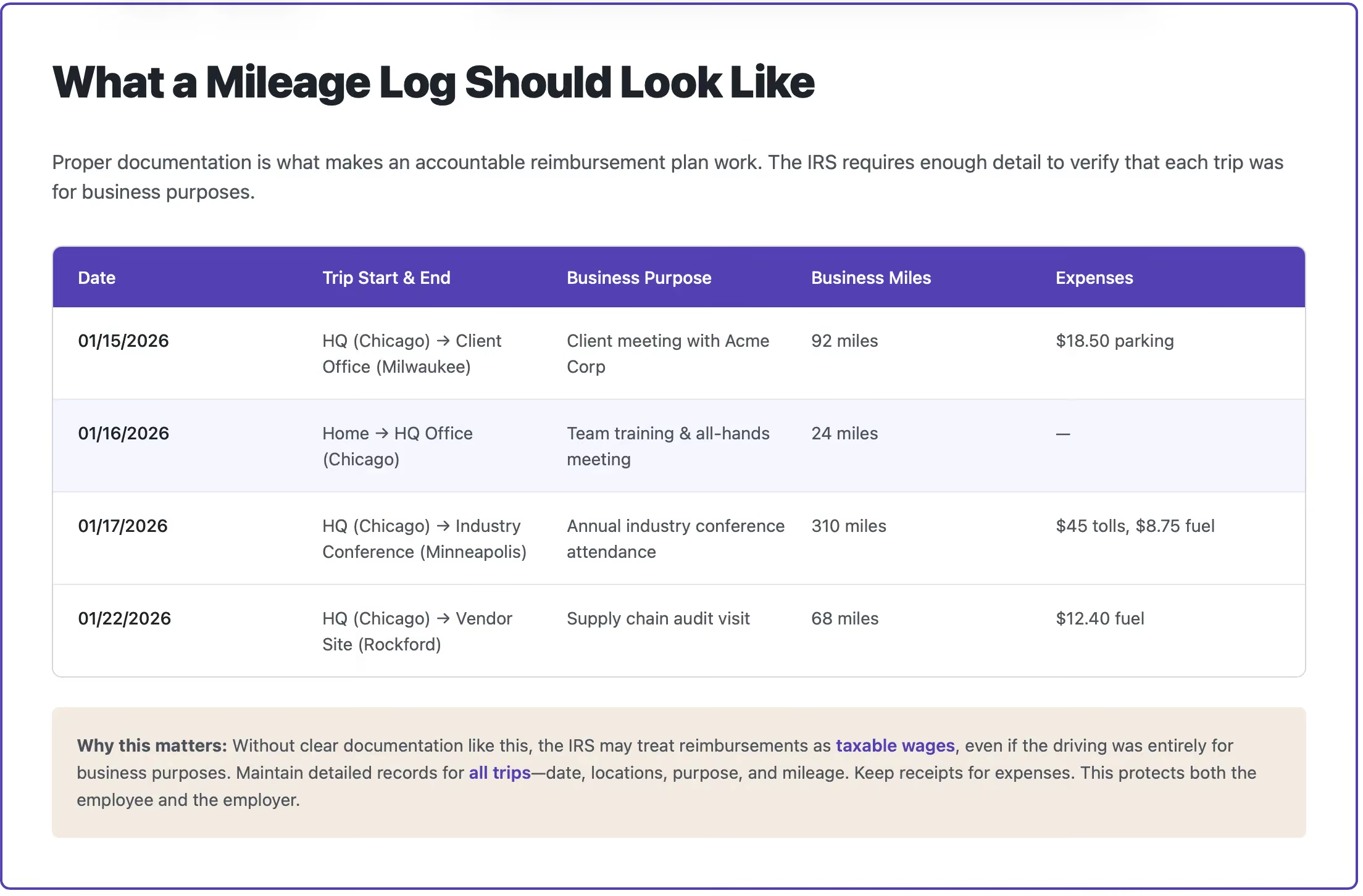
The IRS expects employees to keep records showing enough detail to verify that each trip was for business purposes.
That generally includes:
- the date of each trip
- where the trip started and ended
- the business purpose of the trip
- business miles driven
- total annual mileage
- vehicle-related expenses when applicable
Without this documentation, the IRS may treat reimbursements as taxable wages, even if the driving was entirely for business purposes.
Keeping this information manually can become time-consuming, especially for employees who drive every day. Many businesses use mileage tracking apps that automatically record trips and organize the required information throughout the month.
Are Accountable Car Allowance Plans Tax Free?
Yes, they can be.
When an accountable plan follows IRS requirements, reimbursements are generally not treated as taxable wages.
That means employees receive the reimbursement without income tax withholding, and employers avoid payroll taxes on those payments.
However, tax-free treatment depends on maintaining proper documentation.
If employees don't submit mileage records, can't demonstrate a business purpose, or receive reimbursement beyond what's supported by their mileage, some or all of the reimbursement may become taxable.
What Happens If the Reimbursement Is Too High?
This is where many employers get confused.
The IRS uses the annual standard mileage rate as a benchmark for determining whether reimbursements are reasonable. While accountable plans don't necessarily have to reimburse exactly at that rate, payments above what can be substantiated may become taxable.
Here's an example.
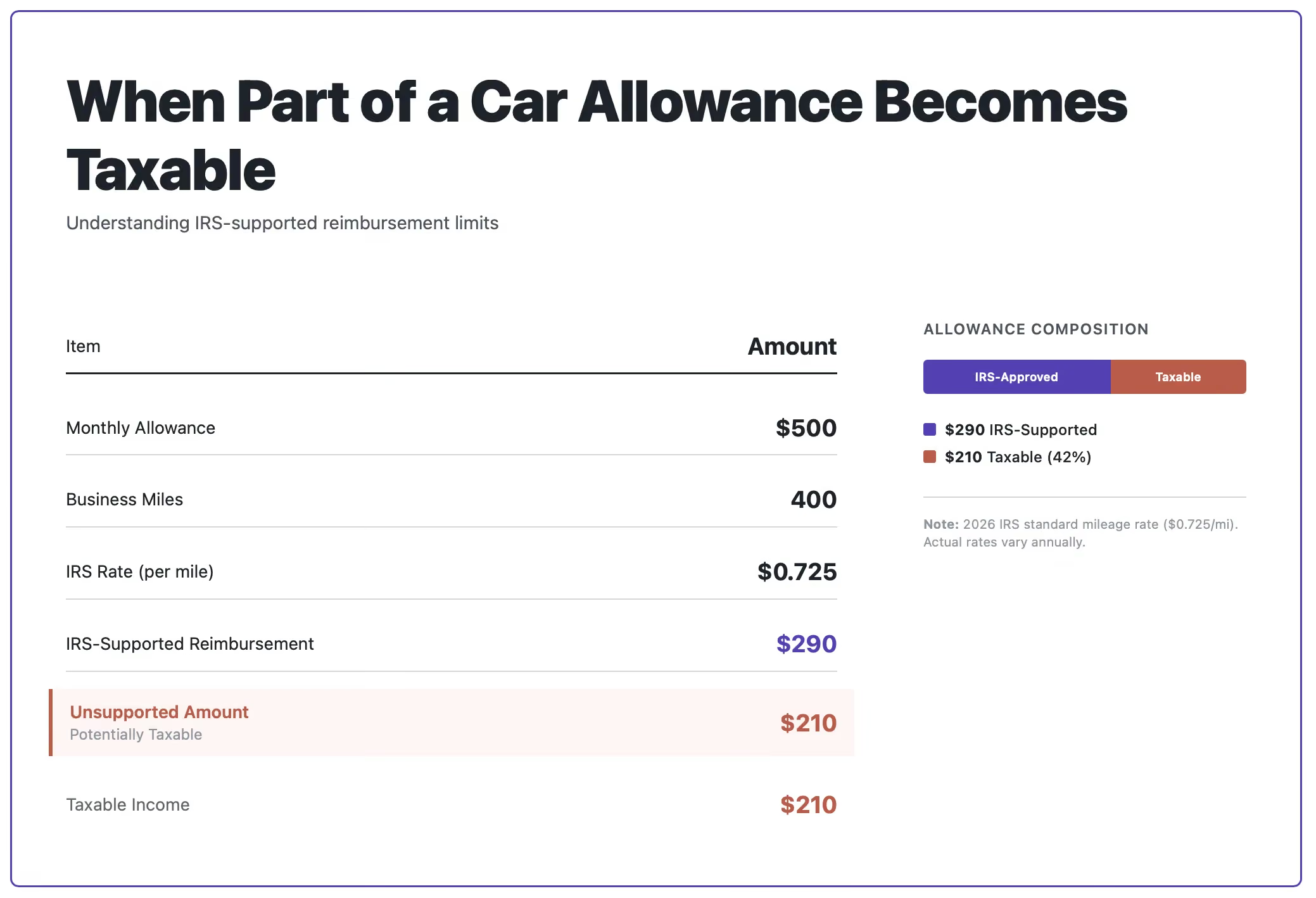
Suppose an employee receives a $500 monthly car allowance but only drives 400 business miles during the month.
If the applicable IRS standard mileage rate supports a reimbursement of $262 for those 400 business miles, the remaining $238 isn't supported by documented business mileage.
Unless that excess amount is returned or handled appropriately, it may be treated as taxable income.
This example shows why documenting mileage matters just as much as the reimbursement itself. Without accurate records, employers may unintentionally create additional tax obligations.
Benefits of an Accountable Car Allowance Plan
An accountable plan isn't just about IRS compliance. It also creates a more transparent reimbursement process for both employers and employees.
Because reimbursements are tied to documented business driving, companies have a much clearer picture of what they're paying for.
That makes budgeting easier and helps reduce the risk of consistently overpaying or underpaying drivers.
Employees also benefit because reimbursements can remain tax free when the plan is managed correctly. Rather than losing part of their allowance to payroll taxes, they receive reimbursement for legitimate business expenses.
There's also greater transparency across the organization. Everyone understands how reimbursements are calculated, what documentation is required, and why payments vary from month to month.
How Does an Accountable Plan Compare to Other Car Allowance Programs?
An accountable plan isn't actually a separate reimbursement method. It's a set of IRS rules that can apply to several different mileage reimbursement programs.
For example, a company might offer a Tax-Free Car Allowance (TFCA), reimburse employees using Cents-Per-Mile (CPM), or use a Fixed and Variable Rate (FAVR) reimbursement program.
As long as the reimbursement follows accountable plan rules and employees properly document their business driving, those reimbursements may qualify for favorable tax treatment.
The biggest difference is how reimbursement is calculated.
A TFCA is one type of accountable plan. It reimburses employees for the real, business-related cost of driving a personal vehicle for work. It can include a fixed monthly amount, a mileage-based payment, or both.
When employees track their business mileage and the program follows IRS accountable plan rules, reimbursements can remain tax free.
CPM reimburses employees for each documented business mile driven, making it a good option for employees with relatively consistent or lower annual mileage.
FAVR reimbursement combines fixed vehicle ownership costs with variable driving costs to reimburse employees for the real, business-required cost of owning and operating a personal vehicle for work. For employees who drive significant business mileage, it often provides the most accurate reimbursement.
Regardless of the reimbursement method, following accountable plan rules is what helps keep payments tax free.
Is an Accountable Car Allowance Plan Right for Your Company?
If your employees regularly use their personal vehicles for work, an accountable plan is worth considering.
It helps employers reimburse business driving in a way that's easier to justify, gives employees a fairer reimbursement process, and can reduce unnecessary tax costs when managed correctly.
While accountable plans require more documentation than a traditional taxable allowance, they often provide better transparency, stronger compliance, and more predictable reimbursement outcomes for both employers and employees.
If you're evaluating vehicle reimbursement programs, it's worth understanding how accountable plans work before deciding whether a taxable allowance, Tax-Free Car Allowance (TFCA), Cents-Per-Mile (CPM) reimbursement, or Fixed and Variable Rate (FAVR) reimbursement is the best fit for your workforce.
If you're looking for help designing or managing an IRS-compliant reimbursement program, Cardata can help. Our team helps organizations across the U.S. design and manage tax-free vehicle reimbursement programs that fit their drivers, business goals, and budget.
Whether you're exploring TFCA, CPM, FAVR, or a mixed reimbursement strategy, we'll help you find an approach that's fair, compliant, and easy to manage.
Talk to Cardata

.jpg)
.jpg)
.jpg)
