
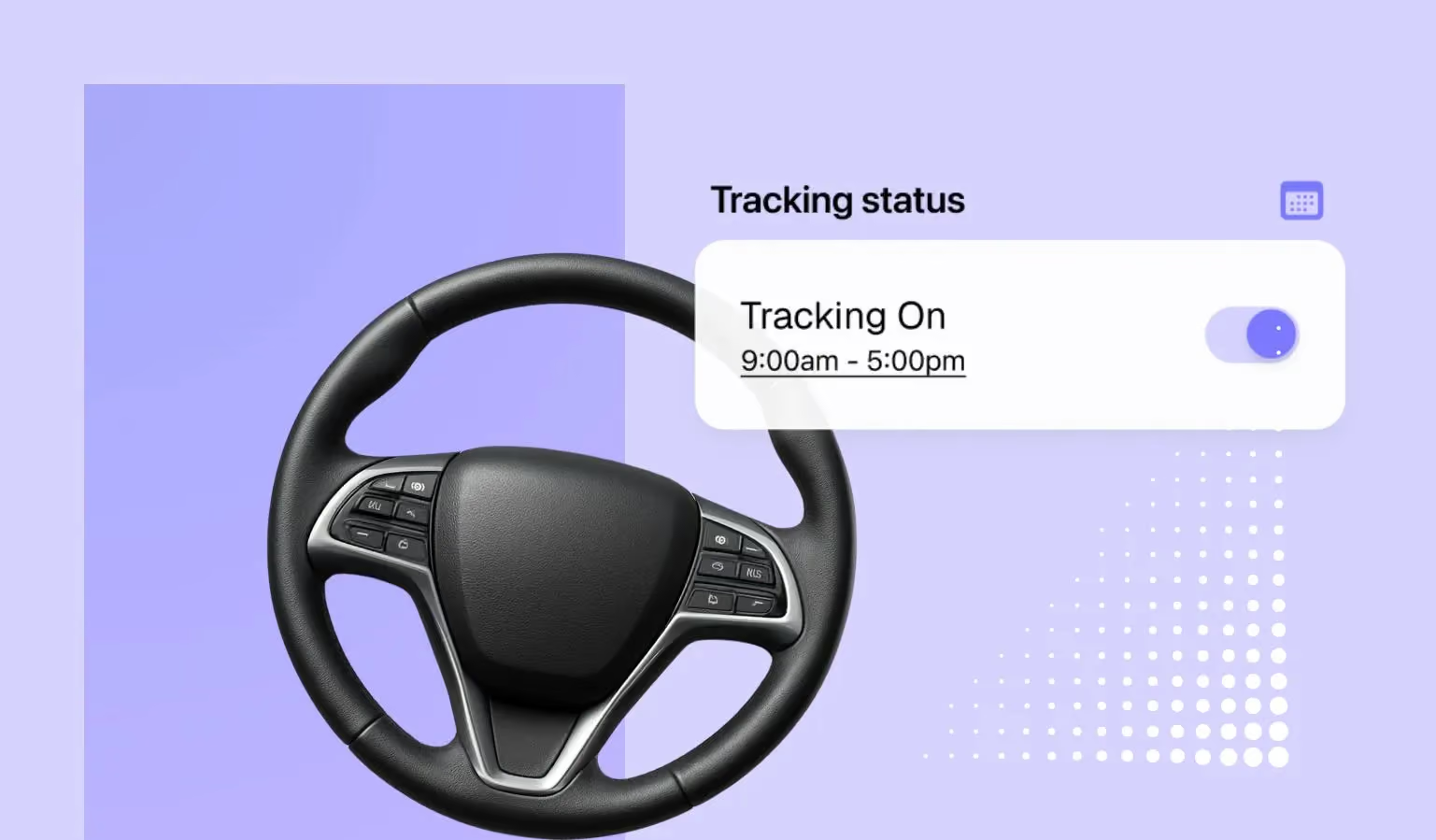
For employees who drive their personal vehicles for work, accurate mileage tracking matters. It helps ensure drivers are reimbursed fairly, gives businesses visibility into travel expenses, and supports IRS-compliant reimbursement programs.
Yet many companies still rely on spreadsheets, paper logs, or systems that create unnecessary administrative work.
Today's mileage tracking apps can automatically capture trips, generate mileage reports, and help businesses manage reimbursement programs more efficiently.
The challenge isn't finding an app. It's finding the right one for your organization's needs.
In this guide, we'll compare some of the best mileage tracking apps available in 2026 and explain which types of businesses they're best suited for.
Top Mileage Tracking Apps at a Glance
Several mileage tracking apps consistently appear at the top of business buyers' shortlists, including Cardata, Motus, MileIQ, Everlance, TripLog, and Driversnote.
Let’s look at how each platform approaches mileage tracking and reimbursement management.
Comparing The Best Mileage Tracking Apps
Not all mileage tracking apps are built for the same type of user.
Some are designed for freelancers who need a simple way to log miles and track tax deductions. Others are built for growing businesses that want more visibility into employee travel.
Enterprise organizations often need additional features such as reimbursement administration, compliance monitoring, insurance verification, business-level reporting, and user management.
The apps below represent some of the most widely used mileage tracking solutions available today.
While all of them help users record business mileage, they differ significantly in their approach to mileage reimbursement management, reporting capabilities, and support for larger organizations.
1. Cardata Mobile
Cardata Mobile is designed specifically for organizations that reimburse employees for using personal vehicles for work.
The app automatically captures mileage using GPS technology and works as part of Cardata's broader vehicle reimbursement platform.
Drivers can track trips, review reimbursements, submit insurance and vehicle information, and monitor compliance status directly within the app, while administrators manage reimbursement programs through the Cardata Portal.
What makes Cardata different from many mileage tracking apps is its focus on end-to-end reimbursement management rather than mileage tracking alone.
The platform supports organizations using Fixed and Variable Rate (FAVR), Cents-Per-Mile (CPM), and Tax-Free Car Allowance (TFCA) programs, helping businesses reimburse employees for the real, business-required cost of owning and operating a vehicle for work.
Cardata is generally a strong fit for mid-sized and enterprise organizations that want mileage tracking, reimbursement administration, reporting, and both IRS rules and company policy compliance support in a single solution.
2. Motus
Motus is an established name in the mileage reimbursement industry and is often compared directly with Cardata by organizations evaluating vehicle reimbursement solutions.
Like Cardata, Motus combines mileage tracking with reimbursement program administration.
The platform supports IRS-compliant reimbursement programs and offers tools for mileage capture, reporting, reimbursement calculations, and program management.
Motus is commonly used by larger organizations with field-based employees. Companies evaluating enterprise reimbursement programs will often consider both Cardata and Motus as part of their selection process.
3. MileIQ
MileIQ is one of the best-known mileage tracking apps for individuals and small businesses.
The platform automatically records drives and allows users to classify trips quickly using a swipe-based interface.
Its simplicity has helped make it a popular choice among consultants, sales professionals, and small business owners who need an easy way to maintain mileage records.
While MileIQ offers some team functionality, its main strength is straightforward mileage tracking rather than enterprise reimbursement administration.
Mileage submitted through the platform is used for standard CPM reimbursement calculations – It doesn’t support more complex vehicle reimbursement programs that incorporate mileage data into calculations, like FAVR or TFCA.
4. Everlance
Everlance combines mileage tracking with expense tracking and tax-related features.
The platform is particularly popular among freelancers, self-employed professionals, and gig workers who want to manage mileage and business expenses from a single application.
For independent professionals looking to maximize tax deductions and simplify recordkeeping, Everlance can provide a convenient all-in-one solution.
5. TripLog
TripLog positions itself between simple mileage trackers and more advanced business reimbursement platforms.
Along with mileage capture, the platform includes expense tracking, reporting tools, and team management capabilities.
This broader functionality can make it appealing for growing businesses that need more than basic mileage tracking but are not yet looking for a fully managed reimbursement solution.
Organizations seeking flexibility and a wider range of expense management features often include TripLog in their evaluation process.
6. Driversnote
Driversnote focuses primarily on mileage tracking.
The app automatically records trips and generates mileage logs that can be reviewed and exported when needed.
The platform emphasizes simplicity and ease of use, making it attractive for users who primarily need accurate mileage records without additional reimbursement management features.
For individuals and small teams with straightforward mileage tracking needs, Driversnote offers a focused solution.
Why Mileage Tracking Matters For Businesses
Mileage tracking is about much more than recording trips.
For businesses that reimburse employees for driving, accurate mileage records help ensure payments are fair and based on actual business use.
They also provide valuable visibility into travel activity and reimbursement costs.
Proper mileage tracking is particularly important for organizations using IRS-compliant reimbursement programs.
Under IRS Publication 463, business mileage should be properly documented to support tax-free reimbursement programs.
And, mileage tracking apps help avoid the problems that manual processes can create.
Employees forget trips, mileage logs become inconsistent, and administrators spend unnecessary time reviewing reports. Mileage tracking apps help reduce those challenges by automating much of the process.
How To Evaluate What Your Business Needs From A Mileage Tracking App
Not every business needs the same type of mileage tracking software.
A company with five employees who occasionally drive to customer meetings has very different requirements than an organization with hundreds of field sales or service employees on the road every day.
Before comparing mileage tracking apps, consider the following questions:
1. How many employees need to track mileage?
For small teams, basic mileage logging may be enough.
As the number of drivers grows, administrative tasks like reviewing mileage reports, approving reimbursements, and managing employee questions can quickly become time-consuming.
Larger organizations often benefit from software that includes reporting, driver management, and reimbursement administration tools.
2. Do you reimburse employees for driving?
If employees use personal vehicles for work, mileage tracking is only one piece of the puzzle.
You'll also need a way to calculate reimbursements, review mileage records, and ensure payments align with company policy.
Some platforms focus solely on mileage tracking, while others combine tracking with reimbursement management.
3. How important is reporting?
Many employers want more than a mileage log.
They need visibility into reimbursement costs, driving activity, employee compliance, program performance, and budget trends. Reporting capabilities become increasingly important as organizations grow.
4. Do you need compliance support?
Businesses using IRS-compliant reimbursement programs need more than accurate mileage records. They also need documentation that supports tax compliance, helps enforce company vehicle policies, and creates a clear audit trail.
Some mileage tracking apps simply record trips. Others help organizations maintain defensible mileage records, verify driver insurance, monitor policy compliance, and support the documentation requirements that reimbursement programs rely on.
5. How much administrative work do you want to manage?
Some mileage tracking apps are designed primarily for drivers. Others are built for both drivers and administrators.
If your team spends hours reviewing mileage reports, answering reimbursement questions, or managing spreadsheets, it may be worth looking for a platform that automates more of the process.
The best mileage tracking app isn't necessarily the one with the most features. It's the one that fits the way your business manages driving for work.
Finding The Best Fit For Your Team
The best mileage tracking app is the one that matches your organization's needs.
For individual professionals, a simple mileage tracker may be all that's required. For businesses with employee drivers, reimbursement management, compliance requirements, and reporting capabilities often become equally important considerations.
Apps like MileIQ, Everlance, TripLog, and Driversnote provide strong mileage tracking capabilities for individuals and smaller organizations.
Businesses that need a more comprehensive reimbursement solution are better off looking at platforms like Cardata and Motus, which combine mileage tracking with broader reimbursement program management.
Before making a decision, consider not only how mileage is captured, but how reimbursements are calculated, approved, reported, and managed over time. The right platform should make driving for work easier for both employees and administrators.
Wondering if Cardata is the right fit for your organization? Learn how our mileage tracking and reimbursement solutions help businesses simplify administration, improve visibility, and support compliant reimbursement programs.
Talk to Cardata

.jpg)
.jpg)
.jpg)
