
.avif)
Food and beverage companies rely on employees who spend much of their workday on the road.
Route sales reps visit grocery stores and convenience retailers, merchandisers build displays and check planograms, district managers travel between territories, and delivery teams transport everything from refrigerated dairy products and beverages to frozen foods and fresh produce.
Supporting all that driving isn’t as simple as handing out company vehicles.
Different roles have different transportation needs. And the vehicle program you choose can affect costs, compliance, the employee experience, and how much time it takes to manage everything.
For some employees, specialized commercial vehicles are simply part of the job.
For other drivers, reimbursing the business use of a personal vehicle can offer a flexible, practical way to support work-related driving.
This guide explains how vehicle programs typically work in the food and beverage industry, when company-owned fleet vehicles make sense, and how to evaluate reimbursement options for employees who drive their personal vehicles for work.
Why Vehicle Programs Look Different in Food & Beverage
Few industries have as many different types of drivers as food and beverage.
A national food manufacturer or beverage distributor may operate several distinct mobile workforces at the same time, each with very different transportation requirements.
These can include:
- Direct Store Delivery (DSD) drivers delivering products to grocery stores and convenience retailers
- CDL drivers transporting palletized shipments between production facilities and distribution centers
- Territory sales representatives managing retail accounts
- Merchandisers restocking shelves, rotating inventory, and building promotional displays
- Foodservice account managers visiting restaurants, hotels, schools, and institutional customers
- Regional and district managers traveling between facilities and customer locations
Even though all of these employees drive for work, they don’t all need the same type of vehicle.
Some roles depend on refrigerated trucks, cargo vans, or specialized delivery equipment. Others just need a reliable passenger vehicle to travel between stores, customer meetings, or sales territories.
That difference matters. A one-size-fits-all vehicle policy can lead to unnecessary costs or unfair outcomes.
Instead, many food and beverage organizations get better results by matching employees and drivers with the vehicle program that best reflects how they actually drive for work.
When Do Fleet Vehicles Make Sense For Food & Beverage Companies?
Fleet vehicles are still the right fit for many operational roles across the food and beverage industry.
Products like dairy, meat, frozen foods, produce, and prepared meals often need refrigerated transportation to maintain the cold chain and meet food safety requirements. Personal vehicles simply aren’t built for that kind of work.
Beverage distributors may also rely on box trucks, side-load delivery vehicles, or larger cargo trucks to safely transport heavy, palletized products. Long-haul trips between manufacturing plants and distribution centers may require tractor-trailers operated by commercial drivers.
In these cases, company-owned or leased fleet vehicles aren’t just convenient. They’re necessary to get the job done.
Fleet vehicles may also make sense when organizations need:
- Specialized cargo capacity
- Refrigeration or temperature-controlled transport
- Branded delivery vehicles
- Commercial driver licensing requirements
- Equipment installations that personal vehicles can’t accommodate
Instead of thinking about fleets as inherently good or bad, it makes more sense to look at each role individually. If employees and drivers genuinely need specialized equipment to do their jobs, investing in fleet vehicles is often the right choice.
For many food and beverage companies, though, these operational roles make up only part of the workforce.
When Does Mileage Reimbursement Make Sense For Food & Beverage Companies?
Many employees across food and beverage organizations spend most of their day traveling between customer locations in standard passenger vehicles.
Sales representatives can visit six to ten grocery stores during a typical day, meeting with store managers, reviewing product performance, and identifying merchandising opportunities.
Merchandisers often travel between multiple retail locations to replenish displays, rotate inventory, verify promotional compliance, and implement seasonal merchandising programs.
Regional account managers may split their time between distributors, retailers, production facilities, and internal meetings across large territories.
Although these employees drive extensively, they rarely require specialized commercial vehicles.
For these roles, reimbursing the business use of a personal vehicle often provides a practical alternative to fleet ownership.
Instead of purchasing, maintaining, insuring, and replacing company vehicles, employers reimburse employees for the real, business-required cost of owning and operating a personal vehicle for work.
Many employees also appreciate driving a vehicle they already know rather than adapting to an assigned company vehicle.
For food and beverage organizations, reimbursement programs can simplify vehicle management while reducing capital investment and ongoing fleet administration.
Mileage Reimbursement Programs For Food and Beverage Companies
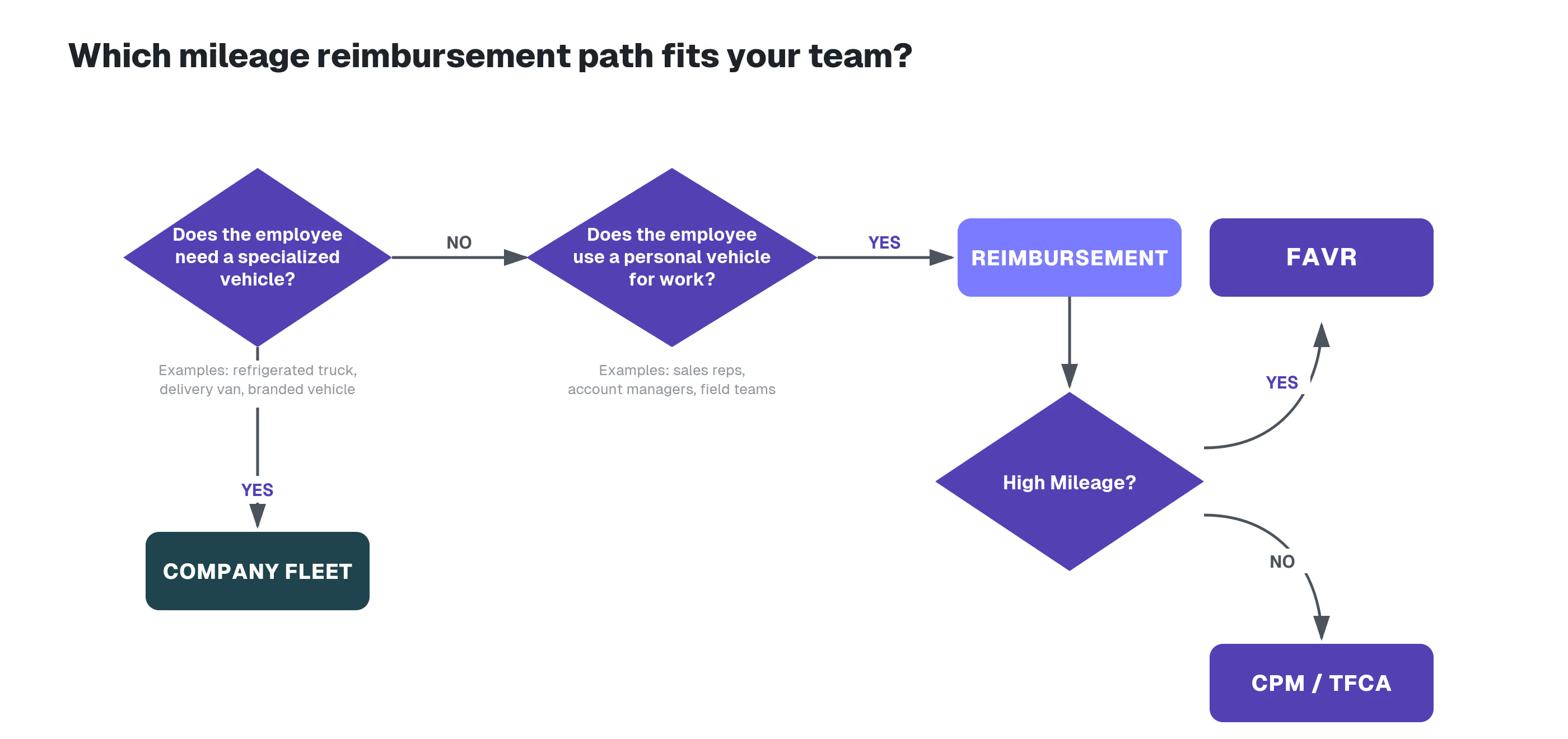
Even among employees who qualify for reimbursement, driving needs can look very different.
A regional beverage sales rep covering several counties might drive more than 20,000 business miles a year.
A grocery merchandiser visiting eight stores a day can rack up business mileage much faster than a district manager who mainly travels for occasional customer meetings.
Meanwhile, a part-time brand ambassador working weekend sampling events may only drive once in a while.
Paying all of these employees the same flat amount can create fairness issues because their vehicle costs can vary significantly.
That’s why many food and beverage companies use a mixed reimbursement strategy, matching employees and drivers with the reimbursement program that best fits how they drive for work.
Fixed and Variable Rate (FAVR) is generally a good fit for higher-mileage employees. FAVR reimburses employees for the real, business-required cost of owning and operating a personal vehicle for work.
It combines a fixed monthly payment for ownership costs, such as insurance, depreciation, and registration, with a variable mileage rate for operating costs like fuel, maintenance, and tires.
Because FAVR rates use localized vehicle cost data, reimbursements can better reflect regional differences in insurance, fuel prices, and other costs.
Cents-Per-Mile (CPM) is often a good fit for lower-mileage drivers. CPM reimburses employees for the real, business-required cost of owning and operating a personal vehicle for work using a set rate (generally at or below the IRS standard mileage rate) for each verified business mile.
Tax-Free Car Allowance (TFCA) lets employers structure fixed reimbursements, variable reimbursements, or a combination of both under IRS accountable plan rules. TFCA reimburses employees for the real, business-required cost of owning and operating a personal vehicle for work.
Matching reimbursement methods to how employees actually drive can make reimbursement fairer for drivers while giving organizations more control over what they spend.
(highlight)
Key Takeaway: The goal isn't to put every employee into the same vehicle program. It's to match each driver with the approach that best reflects their role, vehicle requirements, and business driving.
(highlight)
Company Vehicle vs. Car Allowance vs. Mileage Reimbursement For Food and Beverage Companies
For employees who don't require specialized commercial vehicles, organizations typically look at three options: company vehicles, traditional car allowances, and tax-free reimbursement programs.
Company vehicles provide consistency and operational control, but they can also carry significant acquisition, operating, and administrative costs.
Traditional car allowances are easy to administer, but because they are often paid through payroll, both employers and employees may lose a significant portion of those dollars to taxes.
Flat allowances also don't adjust for geography, mileage, or the actual cost of driving.
Mileage reimbursement programs require thoughtful design and administration, but they can better align reimbursement with employees' business driving while giving organizations more visibility into vehicle-related costs.
Finding the Right Balance Between Fleet and Reimbursement
For many food and beverage companies, the most practical vehicle strategy isn't choosing between fleet and reimbursement across the entire organization. It's determining where each approach makes the most sense.
Fleet vehicles can provide important operational capabilities for employees who need refrigeration, specialized cargo capacity, equipment installations, or other purpose-built vehicles.
For employees who primarily travel between stores, customer locations, and territories in standard passenger vehicles, reimbursement may offer a more flexible way to support business driving.
The distinction matters because fleet costs extend beyond vehicle acquisition or leasing.
Organizations may also need to account for insurance, fuel, maintenance, registration, administration, accident management, replacement cycles, and vehicle disposal. Those costs can be worthwhile when the vehicle serves a clear operational purpose.
For roles that don't require a specialized vehicle, however, organizations may find that reimbursement provides a simpler and more cost-efficient alternative.
Seasonality adds another consideration. Summer beverage promotions, holiday grocery demand, new product launches, and regional merchandising campaigns can temporarily change the number of employees driving for work.
Reimbursement programs can make it easier to accommodate those changes without adding vehicles that may be underused once demand returns to normal.
The result can be a mixed vehicle strategy: fleet where the job requires it, and reimbursement where employees can reasonably use personal vehicles for work.
Why Vehicle Programs Shouldn't Stay Static
A vehicle program that worked five years ago may not be the best fit today. As employees' responsibilities change, their vehicle program needs can change, too.
Food and beverage organizations are constantly evolving. Sales territories expand, distribution networks change, retailers open new locations, and product portfolios grow.
Seasonal promotions, acquisitions, and new customer wins can all change how employees travel and how much they drive.
For example, a territory sales representative who initially covered a single metropolitan area may later manage multiple states.
A merchandiser supporting one grocery banner may eventually work across several regional retailers, substantially increasing annual business mileage.
As employees' responsibilities change, their reimbursement needs often change, too.
Reviewing vehicle programs regularly helps organizations ensure employees remain matched with an approach that reflects their role, vehicle requirements, and driving patterns.
It also gives finance and operations leaders an opportunity to improve fairness, manage unnecessary costs, and keep vehicle programs aligned with the business as it grows.
Common Vehicle Program Challenges for Food & Beverage Companies
Food and beverage companies often manage several groups of drivers with different transportation needs. Common vehicle program challenges include:
- Balancing company-owned fleet vehicles with reimbursement programs across different roles
- Supporting seasonal hiring during holiday promotions, beverage season, or busy production periods
- Managing sales territories and distribution networks spread across different regions
Keeping vehicle costs under control as fuel prices and regional expenses change - Making sure employees have the right insurance coverage when driving personal vehicles
- Cutting down on the administrative work that comes with managing large field teams
- Keeping track of reimbursement spending across hundreds or even thousands of employees
Handling these challenges isn’t just about choosing between fleet vehicles and reimbursement.
It’s about building a vehicle program around how employees and drivers actually work, while giving finance, HR, and operations teams the information and control they need to manage costs over time.
Food and Beverage Vehicle Programs Should Be Safe and Compliant
Whether employees drive company-owned vehicles or their own cars, a strong vehicle program needs clear policies around safety, accountability, and compliance.
For fleet vehicles, that includes regular maintenance and inspections, along with driver training and other safety practices that help keep vehicles road-ready and reduce avoidable downtime.
For employees using personal vehicles for work, companies should establish vehicle and insurance requirements and have a reliable way to monitor compliance.
Accurate business mileage records are also important for reimbursement programs structured under IRS accountable plan rules.
Depending on the organization’s broader safety program, continuous motor vehicle record (MVR) monitoring may provide an additional layer of risk oversight.
Technology can simplify many of these responsibilities by automating mileage tracking, maintaining reliable business mileage records, monitoring insurance compliance, and reducing manual work for both employees and administrators.
Build a Vehicle Program Around How Your Teams Actually Drive
For food and beverage companies, the right vehicle strategy rarely means putting every employee into the same program.
Start by looking at the work itself. Delivery drivers who need refrigerated or specialized vehicles may be well suited to fleet.
Territory sales representatives, merchandisers, foodservice account managers, and regional managers who primarily travel in standard passenger vehicles may be better suited to reimbursement.
Even within those groups, mileage and driving patterns can help determine whether FAVR, CPM, or TFCA is the right fit.
From there, organizations can compare the full cost and administrative requirements of their current programs, including vehicle acquisition or leasing, maintenance, fuel, insurance, registration, payroll taxes associated with taxable allowances, and the time required to manage each approach.
The goal isn't to move every driver away from fleet. It's to make sure each employee is in a vehicle program that makes sense for their job, their driving needs, and the organization.
For food and beverage companies with multiple types of drivers, that creates a more practical approach: keep fleet where the work requires it, use reimbursement where it fits, and continue adjusting the program as the workforce changes.
If you're evaluating the right mix for your workforce, reach out to Cardata to explore what a more tailored vehicle program could look like.
Talk to Cardata
.avif)
.jpg)
