
Most organizations with a mobile workforce don't need every employee in the same vehicle program.
A field technician driving a branded service truck has very different requirements than a sales representative visiting customers in a personal vehicle.
Trying to support both roles with a single approach often creates unnecessary costs, administrative complexity, or an employee experience that doesn't fit how people actually work.
A mixed fleet strategy recognizes those differences. Instead of asking whether fleet or reimbursement is better, it focuses on placing the right people in the right vehicle program.
Employees who require specialized or branded vehicles remain in fleet, while employees who drive personal vehicles for business receive a structured reimbursement for their business driving.
In many organizations, those employees who use their personal vehicles for work are part of what's known as a grey fleet.
A mixed vehicle strategy helps employers manage both company-owned fleet vehicles and grey fleet drivers under programs that fit how each group actually works.
This guide explains when a mixed vehicle program makes sense, how common reimbursement approaches fit different driver profiles, and how organizations can transition to a strategy that remains fair, compliant, and effective over time.
What is a Mixed Vehicle Program?
A mixed vehicle program combines company-owned or leased vehicles with one or more vehicle reimbursement programs.
Employees whose jobs require company-owned assets continue driving fleet vehicles.
Employees who use personal vehicles for business receive reimbursement for the real, business-required cost of owning and operating their vehicle for work through an IRS-compliant reimbursement program.
This approach allows organizations to match each role with the most appropriate vehicle solution rather than applying a single policy across the entire workforce.
For example:
- A field service technician operating a branded truck remains in fleet.
- A regional sales representative driving thousands of business miles each year may participate in a Fixed and Variable Rate (FAVR) reimbursement program.
- A manager who drives occasionally between customer meetings may be reimbursed through a Cents-Per-Mile (CPM) program.
As organizations evolve, employees' driving patterns often change as well. A well-managed mixed program gives employers the flexibility to periodically review utilization, mileage, and costs so employees remain in the vehicle program that best matches their role.
When Does a Mixed Vehicle Program Make Sense?
A vehicle program that worked a few years ago might not be the best fit today. As organizations grow, expand into new markets, or hire for new roles, employees' driving needs often change too.
That's why it's worth checking in on your vehicle strategy from time to time. Some common signs it's time for a closer look include:
- Rising insurance premiums or increasing fleet operating costs.
- The cost of purchasing, maintaining, and replacing company vehicles continues to increase.
- The organization is growing faster than its fleet can efficiently support.
- Employees in standard passenger vehicle roles are driving company vehicles even though they don't need one to do their job.
- More employees are using their personal vehicles for work, but there's no formal grey fleet policy or reimbursement program in place
The goal isn't to decide whether fleet or reimbursement is better. It's to make sure each employee is in the vehicle program that best supports the work they do.
For some roles, that will always be a company vehicle. Heavy commercial vehicles, specialized upfitted trucks, CDL vehicles, and branded service vehicles are business assets that employees typically can't replace with a personal vehicle.
For employees whose work mainly involves driving between customer meetings, job sites, or regional offices in a standard passenger vehicle, a reimbursement program is often a better fit.
Instead of providing a company-owned vehicle, employers reimburse employees for the use of their personal vehicle for work.
A mixed vehicle program brings those approaches together. Fleet stays where it adds operational value, and reimbursement supports employees who don't need a company vehicle to do their job.
The Benefits of a Mixed Fleet Strategy
A mixed fleet strategy helps organizations keep company vehicles where they add real operational value while moving eligible employees into reimbursement programs that are often simpler and more cost effective.
And the opportunity can be significant.
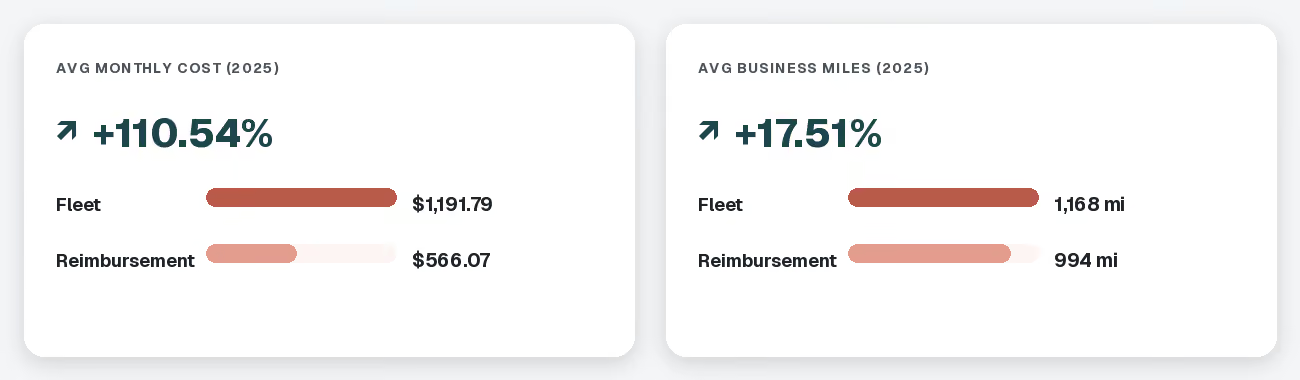
According to Cardata's 2026 Mileage Reimbursement Benchmarks Report, organizations operating company fleets spent an average of $1,191 per driver per month, compared with $566 for reimbursement programs.
Even though fleet drivers averaged slightly more business miles (1,168 versus 994 miles per month), the average cost per business mile was still nearly 90% higher for fleet programs ($1.08 versus $0.57).
Those numbers don't mean every company vehicle should be replaced.
But they do highlight why many organizations are taking a closer look at which roles truly require fleet vehicles and which employees could be better served by a reimbursement program.
1. Better Cost Control
Company cars come with costs whether they're being driven or sitting in the parking lot. Between depreciation, insurance, maintenance, registration, and replacement, those expenses add up over time.
For employees who don't need a company vehicle, reimbursement can be a more practical option.
Instead of paying to own and manage another vehicle, employers reimburse employees for the real, business-required cost of using their personal vehicle for work.
2. More Flexibility as Your Business Changes
Vehicle programs shouldn't make growth harder.
As teams expand, territories change, or employees move into new roles, reimbursement programs are much easier to scale than company fleets.
There's no vehicle to order, assign, or eventually sell when someone joins or leaves the program.
It's also easier to adjust over time. Reviewing mileage and driving patterns regularly helps make sure employees stay in the vehicle program that's the best fit for the work they actually do.
3. Less Administration
Every company vehicle comes with work behind the scenes, from ordering and registration to maintenance, repairs, renewals, and eventual replacement.
A reimbursement program removes much of that administrative burden.
Modern reimbursement platforms can automate mileage tracking, reimbursement calculations, and compliance, giving finance, HR, and fleet teams fewer moving pieces to manage.
4. A Fairer Experience for Employees
Not every employee drives the same number of miles, and the cost of owning a vehicle isn't the same everywhere.
A mixed vehicle strategy makes it easier to match employees with the reimbursement program that fits their role and driving patterns.
That means employees are reimbursed for the cost associated with operating their personal vehicle for work, rather than everyone receiving the same vehicle or reimbursement regardless of their needs.
Vehicle Reimbursement Programs: Which One Fits Which Role?
There isn't a single reimbursement program that's right for every employee. The best fit depends on how much employees drive, the work they do, and how your organization wants to manage its vehicle program.
There isn’t one reimbursement approach that works for every employee.
Many organizations use FAVR for higher-mileage field employees, CPM for occasional drivers, and fleet vehicles for roles that require specialized equipment or branded vehicles.
The goal isn’t to choose one program for everyone. It’s to match each employee with the vehicle program that best fits how they drive and the work they do.
Why Personal Vehicles Work Well for Many Business Drivers
Not every employee needs a company vehicle to do their job. In fact, many organizations already have a grey fleet, employees who use their personal vehicles for business.
The difference is whether that driving is supported by a well-managed reimbursement program.
For employees who spend their time driving between customers, job sites, or meetings in a standard passenger vehicle, using their own vehicle can be a practical option for everyone involved, especially when it's paired with the right reimbursement program.
For the Organization
- Spend less on vehicles that don't need to be owned, maintained, or replaced.
- Reduce the time spent managing vehicle purchases, maintenance, registrations, and other fleet administration.
- Reimburse employees only for documented business driving, helping support accurate, IRS-compliant reimbursements.
- Regularly review the program to make sure reimbursements stay fair, compliant, and aligned with changing business needs.
For the Employee
- Drive the vehicle that already fits their work and everyday life.
- Get reimbursed for the business-required cost of owning and operating a personal vehicle for work.
- Receive tax-free reimbursements when the program is administered under an IRS accountable plan and business mileage is properly documented.
- Have a clear understanding of how reimbursements are calculated and what business driving is covered.
How to Build a Mixed Vehicle Program
Moving to a mixed vehicle program doesn't have to happen all at once. In fact, it usually works better when it's rolled out in stages.
The goal isn't to replace every company vehicle. It's to make sure employees are in the vehicle program that best fits the work they do.
1. Start With Employee Roles
The easiest place to begin is by looking at how employees actually drive.
Which roles require a company-owned vehicle because of specialized equipment, branding, or commercial requirements? Which employees spend most of their time driving a standard passenger vehicle between customer meetings or job sites?
Mileage reports, vehicle utilization data, and telematics (where available) can help answer those questions with real data instead of assumptions.
2. Build the Program Together
A mixed vehicle strategy works best when Finance, HR, and fleet teams are involved from the beginning.
Finance can compare costs and evaluate reimbursement options. HR can help employees understand what the change means for them.
Fleet teams can identify which vehicles should remain in service and which roles are better suited to reimbursement.
When everyone is working toward the same goal, the transition tends to be much smoother.
3. Start Small
There's no need to change everything overnight.
Many organizations begin with one department, one region, or a group of employees with similar driving patterns.
Running a pilot gives the business a chance to measure costs, gather employee feedback, and fine-tune the program before expanding it.
4. Help Employees Understand the Change
For many employees, moving away from a company vehicle is a big change. Clear communication helps answer questions before they become concerns.
Explain why the organization is making the change, how reimbursements are calculated, and what employees can expect going forward. The more transparent the process is, the easier the transition tends to be.
5. Keep Reviewing the Program
A mixed vehicle program shouldn't be set up once and forgotten.
Employees change roles. Territories expand. Business mileage increases or decreases over time.
Reviewing driving patterns periodically helps make sure employees are still in the vehicle program that's the best fit.
Someone who starts driving significantly more miles may be better suited to FAVR than CPM, while another employee's role may shift in the opposite direction.
That's one of the biggest advantages of a mixed approach. It gives organizations the flexibility to adapt as the business changes.
How Do You Know the Program Is Working?
Like any business program, a mixed vehicle strategy should be reviewed regularly.
The goal isn't simply to reduce costs. It's to make sure employees are being reimbursed fairly while giving the business a program that's easy to manage and built to grow.
Some of the most useful metrics include:
Regular program reviews make these conversations much easier. Instead of reacting to rising costs or employee concerns, organizations can make small adjustments over time as the business evolves.
Build the Right Vehicle Program for Every Employee
A mixed vehicle strategy isn't about replacing fleet vehicles. It's about making sure every employee is in the vehicle program that best fits the work they do.
For some roles, that will always be a company-owned vehicle. For others, a reimbursement program can reduce costs, simplify administration, and ensure employees are fairly reimbursed for using their personal vehicle for work.
As your business grows and changes, your vehicle program should evolve too.
Regularly reviewing employee roles, driving patterns, and reimbursement programs helps keep your strategy aligned with the needs of both your business and your workforce.
If you're exploring a mixed vehicle strategy or wondering whether some employees would be better served by reimbursement, Cardata can help.
Our team works with organizations to design and manage compliant vehicle reimbursement programs that fit alongside existing fleets, making it easier to put the right people in the right vehicle program.
Talk to Cardata
.jpg)
.jpg)
.jpg)
