
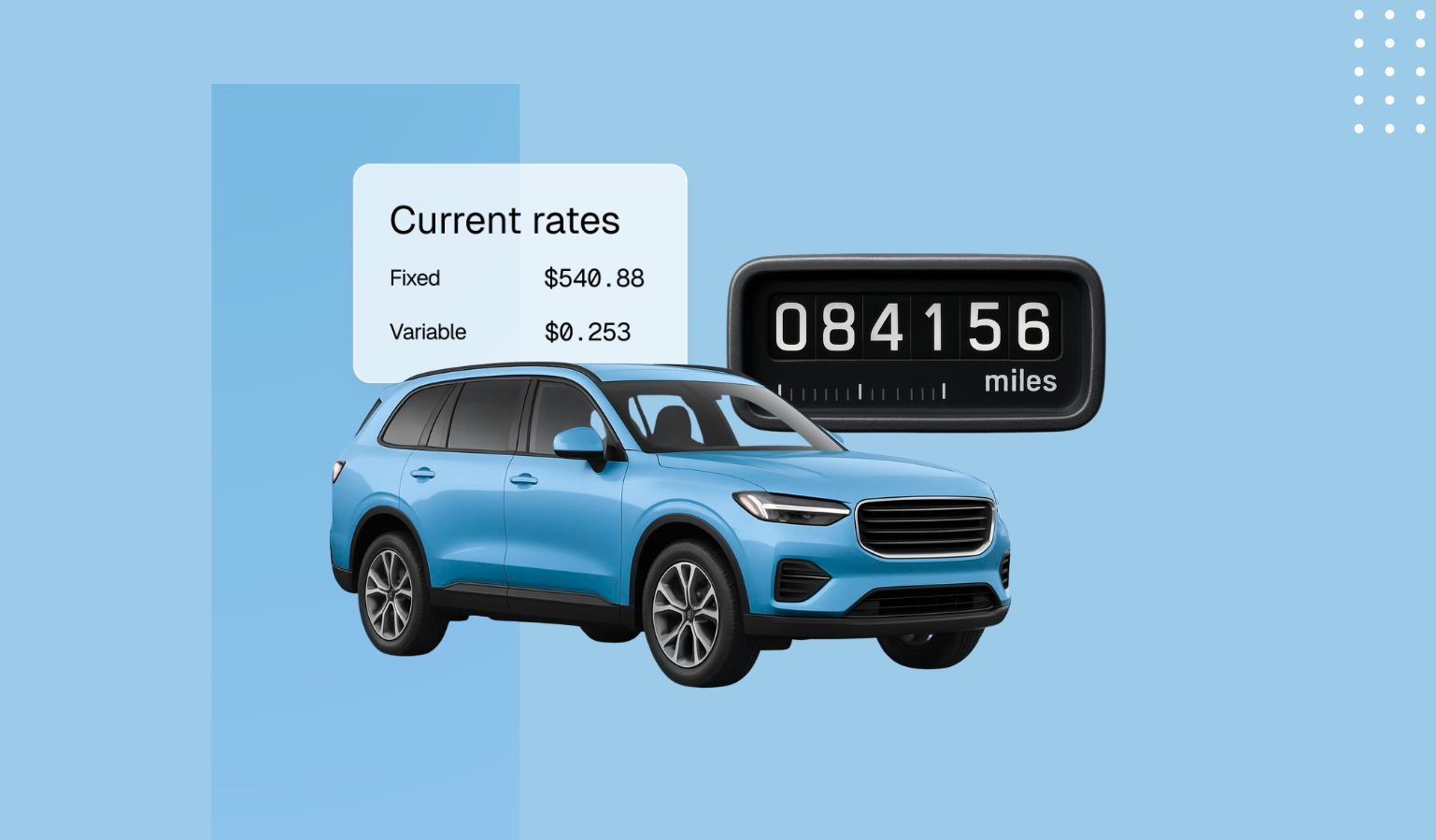
Getting a Fixed and Variable Rate (FAVR) reimbursement program up and running is only the beginning.
Driver mileage changes. Employees replace cars. Insurance policies renew. People move, change territories, or take on different responsibilities. Vehicle and operating costs change over time, too.
A FAVR program needs to keep up with those changes.
For employers, FAVR program maintenance means regularly reviewing mileage, vehicles, insurance, driver information, reimbursement inputs, and the records required under IRS rules.
It also means knowing what to do when an employee or vehicle stops meeting one of those requirements.
Here is what employers should keep an eye on throughout the year.
What Does FAVR Program Maintenance Involve?
FAVR reimburses employees for the business-required costs of owning and operating a personal vehicle for work through fixed and variable payments calculated using a standard automobile and local cost data.
The allowance combines fixed payments for costs such as depreciation or lease payments, insurance, registration, and license fees with variable payments tied to costs such as fuel, oil, tires, maintenance, and repairs.
The IRS requires FAVR allowances to be based on reasonable, statistically defensible consumer cost data from the employee's applicable geographic area, or “base locality.”
These requirements are outlined in IRS Revenue Procedure 2019-46.
Once the program is running, employers still need to monitor the information that supports it. That can include:
- business mileage and mileage records
- vehicle age, cost, and ownership or lease status
- insurance coverage
- employee location
- changes in job responsibilities or driving patterns
- the cost information used to calculate reimbursement rates
Recordkeeping matters as well.
Under Revenue Procedure 2019-46, the employer, payor, or its agent must maintain records of the statistical data and projections behind the FAVR allowance, along with required information submitted by participating employees.
That makes FAVR compliance an ongoing administrative process rather than a one-time program setup.
(highlight)
Read our full FAVR compliance guide for a deeper look at the requirements drivers need to meet to stay compliant.
(highlight)
How Often Should a FAVR Program Be Reviewed?
A good FAVR program combines ongoing monitoring with a structured annual review.
Some IRS requirements happen specifically around the calendar year.
Within 30 days after the beginning of each year that a vehicle is covered by FAVR, the employee must provide the vehicle's make, model, year, proof of insurance coverage limits, and odometer reading.
When a vehicle first enters the program, the employee must provide additional information within 30 days, including the vehicle's purchase price or applicable lease value and certain information about how depreciation or actual expenses have previously been handled.
There is also an employer-side year-end requirement.
Within 30 days after the end of the calendar year, the payor must give each covered employee a statement explaining certain depreciation information for owned vehicles or the applicable expense treatment for leased vehicles.
These reporting requirements are detailed in Revenue Procedure 2019-46.
Those annual checkpoints matter, but employers should also respond to changes during the year.
A vehicle replacement, insurance change, employee move, or significant shift in driving activity can all affect the program.
Rate inputs deserve attention too.
Variable FAVR rates can be calculated using computation periods of up to one year, and both fixed and variable payments must be made at least quarterly under the IRS methodology.
Because fuel, insurance, maintenance, and other costs change, employers should also understand how FAVR rate inputs affect reimbursement.
In practice, an annual review works best when it sits on top of regular monitoring throughout the year.
What Happens if a FAVR Driver Doesn't Reach 5,000 Business Miles?
The 5,000-mile rule is one of the most commonly discussed FAVR requirements, and it is worth getting the details right.
Under Revenue Procedure 2019-46, a FAVR allowance may be provided only to an employee who substantiates at least 5,000 business miles during the calendar year or, if greater, 80% of the annual business mileage established for that FAVR allowance.
If the employee participates in the program for only part of the year, those mileage limits may be prorated monthly.
There is a separate mileage figure involved in building the program.
“Annual business mileage” means the amount of business driving the employer reasonably projects for the standard automobile during the calendar year.
Under IRS rules, that projected amount cannot be lower than 6,250 miles.
So there are really two concepts to keep straight.
The employer uses projected annual business mileage when constructing the FAVR allowance.
The employee then needs to substantiate at least 5,000 business miles for the year or, if greater, 80% of the annual business mileage established for the FAVR allowance.
If an employee fails a FAVR requirement, the IRS says that employee cannot be treated as covered by the FAVR allowance during the applicable period of failure.
The related expenses may still qualify for treatment under the other mileage substantiation rules in Revenue Procedure 2019-46 when those requirements are met.
For an employer, falling mileage is also a useful operational signal.
If someone's responsibilities have changed and lower business mileage is becoming normal, it may be time to review whether FAVR is still the right reimbursement method for that employee.
What Happens When a Vehicle Ages Out of FAVR?
FAVR also places requirements on the vehicle an employee uses.
Every FAVR allowance has a retention period. This is the number of calendar years the employer expects the standard automobile to remain in service before replacement.
The IRS requires a retention period of at least two calendar years.
For an employee's personal vehicle to qualify, its model year cannot differ from the current calendar year by more than the number of years in the program's retention period.
For example, with a four-year retention period, the difference between the vehicle's model year and the current calendar year cannot exceed four years.
Once it falls outside the program's permitted vehicle age, that vehicle no longer meets the FAVR vehicle requirement.
At that point, the employer needs to address the employee's program status. That may mean the employee moves to a qualifying vehicle or the employer evaluates another appropriate reimbursement arrangement.
Vehicle cost matters too.
The employee must own or lease the vehicle, and its cost when new must have been at least 90% of the standard automobile cost used to establish that FAVR allowance during the first calendar year the employee received the allowance for that vehicle.
The FAVR standard vehicle and 90% rule also works alongside retention period and employee vehicle requirements to determine whether a vehicle qualifies for the program.
Vehicle compliance is worth checking regularly, especially when employees replace cars or approach the end of the program's retention period.
What Other FAVR Requirements Should Employers Monitor?
Mileage and vehicle age are only part of the picture.
Insurance is another important requirement. An employee's coverage limits must be at least equal to the insurance coverage limits used to calculate the fixed portion of the FAVR allowance.
The insurance component used to calculate the allowance must also reflect rates in the applicable base locality for the current calendar year.
Mileage tracking and substantiation matters throughout the program.
Employees need to substantiate their business transportation expenses under applicable IRS rules.
IRS Publication 463, Travel, Gift, and Car Expenses, provides additional guidance on transportation expenses, reimbursement, and the records used to substantiate business vehicle use.
Program-wide requirements also apply. FAVR allowances must cover at least five employees at all times during the calendar year.
A FAVR allowance cannot be provided to a control employee under the applicable IRS definition, and a majority of covered employees cannot be management employees at any point during the year.
The standard automobile cost needs an annual check as well.
For 2026, the maximum standard automobile cost that may be used to compute a FAVR allowance is $61,700 for automobiles, including trucks and vans. The IRS confirmed this amount in Notice 2026-10.
The IRS publishes this limit annually, so employers should use the figure for the applicable tax year.
Do FAVR Drivers Need to Qualify Every Year?
FAVR requirements continue from year to year.
Several pieces of information must be refreshed annually, including vehicle make, model, year, insurance coverage limits, and the odometer reading.
The employee's substantiated business mileage for the calendar year also has to satisfy the applicable FAVR mileage requirement.
That makes the annual review a useful point to bring everything together.
Employers can review vehicle eligibility, insurance, employee information, mileage patterns, program assumptions, and required reporting in one structured process.
Regular monitoring during the rest of the year helps keep that review manageable.
When Should an Employer Reconsider Whether FAVR Still Fits a Driver?
Sometimes a compliance change tells you something bigger about the employee's driving profile.
FAVR is commonly used for employees who drive consistently for work because it separates fixed vehicle costs from variable operating costs.
When an employee's role changes and business driving becomes much less frequent, the economics of that reimbursement arrangement change too.
For some lower-mileage drivers, Cents-Per-Mile (CPM) reimbursement may be worth considering.
CPM reimburses employees for business use of their personal vehicles based on the number of business miles they drive and an established per-mile rate.
A company can also use different reimbursement programs for different groups of employees when each program is structured and administered appropriately.
For example, an organization may use FAVR for eligible employees with consistent business mileage and CPM for occasional drivers.
The important part is matching the reimbursement method to how people actually drive for work, then keeping the right controls around each program.
(highlight)
Read our comparison of FAVR and CPM for a closer look at how the two reimbursement methods fit different driving profiles.
(highlight)
How Do You Keep a FAVR Program Compliant as Your Workforce Changes?
Good FAVR program maintenance comes down to visibility and follow-through.
Accurate mileage records make changing driving patterns easier to spot. Current insurance and vehicle information help identify upcoming eligibility issues.
Regular rate and program reviews help employers keep the assumptions behind reimbursement aligned with current conditions.
As the workforce grows, those checks can become harder to manage manually. More employees can mean more vehicles, locations, mileage records, insurance documents, and eligibility dates to monitor.
Cardata manages FAVR programs end to end, including mileage capture, reimbursement calculations, insurance verification, vehicle eligibility monitoring, documentation, and ongoing compliance support.
If your FAVR program is already running, it is worth checking whether it still reflects how your employees drive today.
Talk to Cardata about reviewing your FAVR program and keeping it aligned as your drivers, vehicles, and business needs change.
Talk to Cardata



.jpg)
