
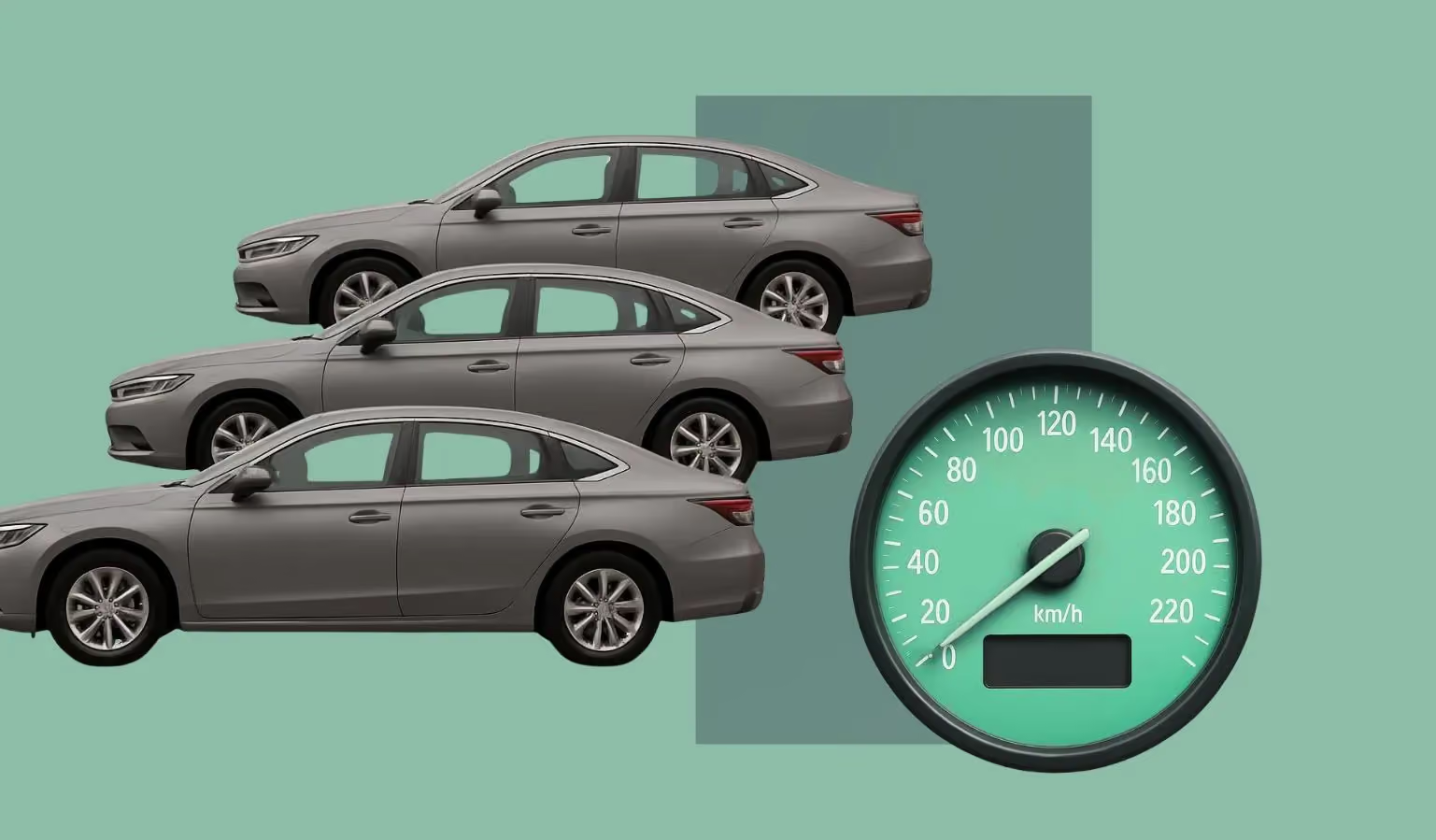
Most people hear the word “fleet” and think of rows of company vehicles in a parking lot.
But here's the reality: many companies already have a grey fleet and don't even realize it.
Any time an employee uses their personal vehicle for a work trip and submits mileage for reimbursement, they're part of a grey fleet.
In many organizations, those drivers are managed through Finance or HR as an expense process rather than as part of a formal mobility strategy.
As a result, what is effectively a fleet often exists in the background without dedicated oversight.
Many businesses today operate something more flexible than a traditional fleet model. They use a mix of company-owned vehicles and employees driving their own cars for work.
That’s called a grey fleet.
A grey fleet is a mobility strategy that intentionally combines dedicated company vehicles with a population of drivers who use their own personal vehicles for work and are reimbursed for doing so.
It’s a simple idea, but it changes how businesses think about work-related driving.
Instead of assigning every employee a company vehicle, organizations reserve fleet vehicles for the roles that truly need them. Other employees use their personal vehicles and receive reimbursement for business use.
For many companies, that approach is more practical, more flexible, and often less expensive than trying to operate a fully centralized fleet.
In this guide, we’ll explain what a grey fleet is, how it works, and why businesses are taking a more strategic approach to managing employee-owned vehicles used for work.
Grey Fleet Meaning: A Simple Definition
A grey fleet combines company vehicles with employees who use their personal vehicles for work and receive reimbursement.
In most organizations, drivers naturally fall into two groups.
Some employees need company vehicles because driving is central to the job. Delivery drivers, service technicians, and equipment haulers often require specialized vehicles, storage capacity, or heavy daily use.
Others need transportation for business travel but don't necessarily need a company-owned vehicle. Regional sales reps, project managers, field managers, and healthcare workers often fit into this category. For these employees, a personal vehicle paired with fair reimbursement can work just as well.
A grey fleet brings those two groups together under a single mobility strategy. Rather than placing every employee in the same vehicle program, companies match the program to the role.
Why Is It Called a Grey Fleet?
The term “grey fleet” comes from the space between a traditional fleet and fully personal driving.
Company-owned vehicles are clearly part of the corporate fleet. Personal vehicles are privately owned.
Grey fleet drivers sit somewhere in the middle. They use personal vehicles, but they drive them for business purposes.
The vehicles themselves are not company assets, yet they still play a role in company operations.
That “in-between” space is where the term comes from. It isn’t always black and white. The vehicles are privately owned, but the driving is work-related, creating a shared responsibility between employees and employers.
How Does a Grey Fleet Work?
A grey fleet works by dividing drivers into different mobility groups based on what the job actually requires.
Some employees receive company vehicles because they need specialized equipment, high utilization vehicles, or commercial transportation.
Other employees simply need reliable transportation for occasional or moderate business driving. Instead of assigning those employees company cars, businesses reimburse them for using personal vehicles.
That reimbursement can take several forms.
Some companies use mileage reimbursement programs based on distance driven. Others use structured reimbursement models like Fixed and Variable Rate (FAVR) or Tax-Free Car Allowances (TFCA).
The overall goal is the same: compensate employees fairly for business driving without putting every driver into a dedicated fleet vehicle.
What Types of Companies Use Grey Fleets?
Grey fleets exist across a wide range of industries.
Construction companies often have company trucks for hauling equipment while project managers drive personal pickups between job sites.
Healthcare organizations may operate specialized fleet vehicles while nurses or care coordinators use personal cars for local travel.
Beverage distributors might keep delivery trucks in the fleet while sales teams use reimbursed personal vehicles to visit accounts.
The pattern is common because many businesses have different types of drivers performing different types of work.
Not every role requires a company-owned vehicle. When businesses take a step back and assess the vehicle needs of each role, they can start building a more efficient mobility solution that fits the way their teams actually work.
Grey Fleet vs Company Fleet: What’s the Difference?
A traditional company fleet is made up entirely of vehicles owned or leased by the business.
The employer manages everything, including maintenance, insurance, fuel, lifecycle replacement, and compliance.
A grey fleet is different because only part of the workforce operates company vehicles. The rest of the drivers use personal vehicles and receive reimbursement for business use.
The biggest difference is ownership.
In a company fleet, the organization owns the vehicles. In a grey fleet, employees own at least part of the vehicle population themselves.
Are Grey Fleets Unstructured?
No. A properly managed grey fleet still requires policies and oversight. Businesses still need to think about:
- Driver eligibility
- Insurance verification
- Mileage tracking
- Reimbursement accuracy
- Compliance documentation
The fact that employees own the vehicles does not remove the need for structure.
In many cases, mileage reimbursement programs require more documentation because businesses need clear records for tax and compliance purposes.
Fortunately, mileage tracking and reimbursement software can automate much of that process, helping companies manage grey fleet programs efficiently while keeping records accurate and compliant.
What Are the Benefits of a Grey Fleet?
The biggest benefit is flexibility.
Grey fleets allow businesses to support different driver populations without forcing every employee into the same vehicle program.
For some organizations, grey fleets can also reduce costs by limiting company vehicle ownership to the roles that truly require it.
They can also reduce certain liability exposures. Unlike company vehicles, which often remain the employer’s responsibility even when driven outside business hours, personal vehicles are generally only connected to the company when they are being used for work-related travel.
Employees might also prefer reimbursement programs because they can drive a vehicle they chose themselves instead of a standardized company car.
There are operational advantages too.
Managing fewer company-owned vehicles can reduce administrative workload around maintenance, leasing, and vehicle replacement cycles.
What Are the Challenges of a Grey Fleet?
Grey fleets still need oversight.
If businesses do not verify insurance, track mileage properly, maintain clear reimbursement policies, or monitor driver eligibility, problems can emerge quickly.
Driver safety is another important consideration.
Employees may be using their own vehicles, but they are still driving on behalf of the business. Many organizations use motor vehicle record (MVR) checks, license verification processes, and driver safety training to help ensure employees remain qualified and safe behind the wheel.
Compliance is also an important consideration. Mileage reimbursements and tax-free reimbursement programs need proper documentation to remain compliant with IRS rules.
There is also the challenge of visibility.
With company-owned vehicles, businesses typically have direct control over the vehicles themselves. In a grey fleet, part of the driver population operates independently owned vehicles, which makes clear policies, reporting, and safety controls especially important.
Why Grey Fleets Are Becoming More Common
As businesses rethink mobility costs and workforce flexibility, they are taking a more strategic approach to how employees drive for work.
Many organizations are moving away from the idea that every mobile employee automatically needs a company vehicle.
Instead, they are building mobility programs around what employees actually need to do their jobs, matching different roles to the vehicle solutions that make the most sense.
That more deliberate approach to mobility planning is one reason grey fleets have become an important part of the conversation.
How Cardata Helps Manage Grey Fleets
Grey fleets work best when reimbursement, compliance, and mileage tracking are managed consistently.
At Cardata, we help businesses build and manage reimbursement programs for employees who use personal vehicles for work.
Our platform supports mileage tracking, tax-free reimbursement programs, compliance workflows, and reporting tools designed for modern mobility programs.
For businesses exploring mixed vehicle strategies, grey fleets offer a more flexible way to support employees on the road without relying entirely on traditional company fleet models.
For a more in-depth look at the trends shaping work-related driving, download our free ebook, The Rise of the Grey Fleet. You'll learn why grey fleets are growing, the risks and opportunities they create, and how organizations can build a modern mobility strategy that balances flexibility, compliance, and cost control.
If you're evaluating reimbursement programs, managing a mixed vehicle population, or simply trying to understand your organization's exposure, Cardata can help.
Talk to Cardata

.jpg)
.jpg)
.jpg)
