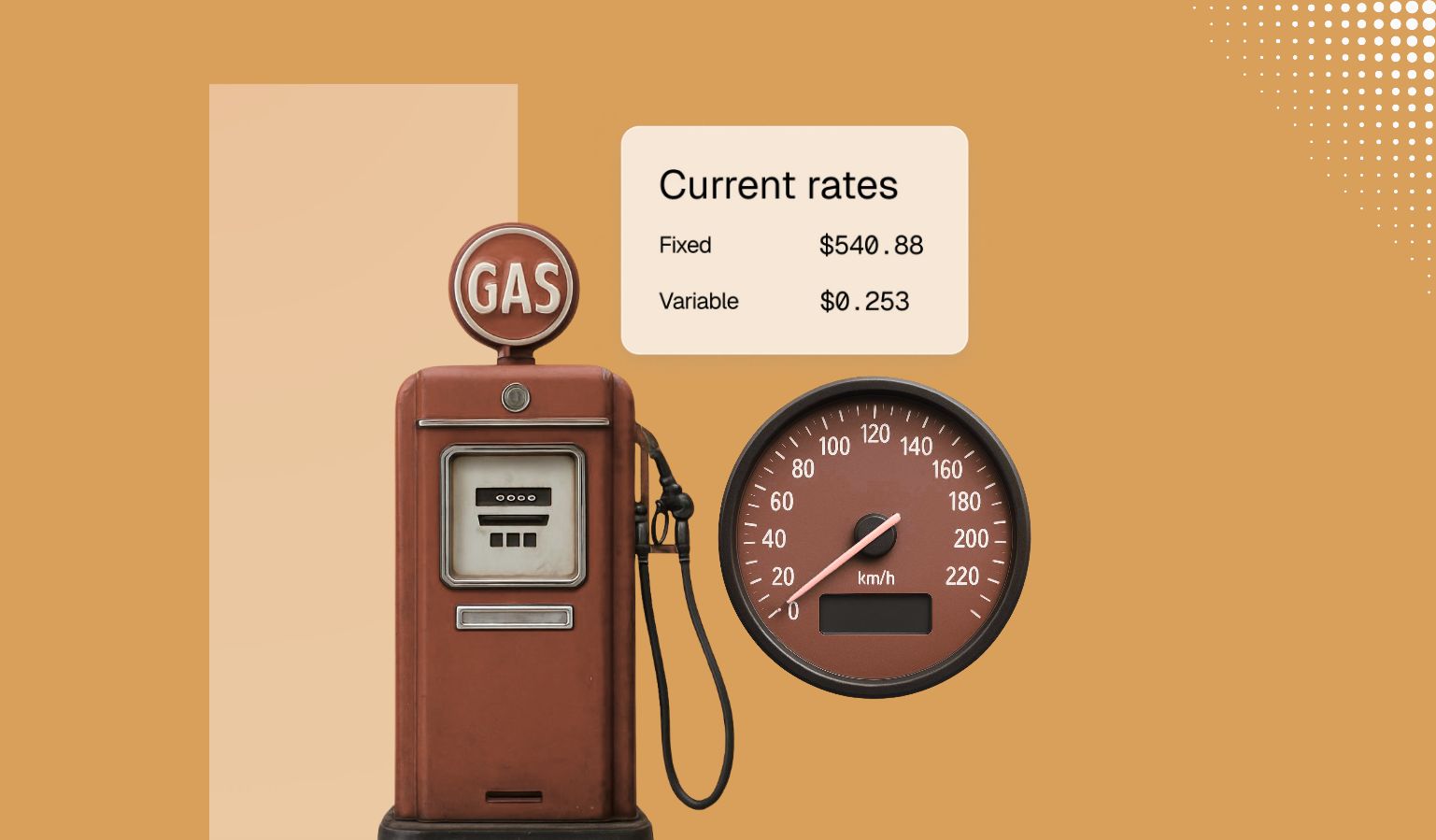

If your company pays a flat car allowance, you’re not alone. It’s one of the most common ways to support employees who drive for work because it is simple to run and easy to understand.
The problem is how it is taxed. Most flat allowances are treated as income. That means higher payroll costs for the business and less take-home pay for employees.
There actually is a better way to structure the same benefit. By moving to an accountable allowance, you can keep the intent of the program while improving tax efficiency and staying compliant.
This guide explains what changes, why it matters, and how different accountable options work in practice.
What Is the Difference Between a Taxable and an Accountable Car Allowance?
At a high level, vehicle allowances fall into two categories: Some are taxable and some are not.
The difference is not the payment itself. It is whether the payment is tied to documented business use.
A taxable car allowance is a fixed payment that doesn’t require any proof of business driving. Employees who drive receive the same amount regardless of how much they drive.
Because there is no documentation, the IRS treats the payment as income. It is added to payroll, taxed like wages, and increases both employer and employee tax burden.
This structure is often called a non-accountable plan. It is common because it removes administrative work. There are no mileage logs to review and no receipts to process. Payroll simply runs the same number each month.
But that simplicity comes at a cost. The company pays more in payroll taxes than necessary, and drivers lose a portion of the benefit to income tax.
An accountable allowance works differently. Instead of treating the payment as income, it treats it as a reimbursement for business expenses. To qualify, the payment must be connected to work-related driving and supported by documentation.
In practice, this means employees track their mileage or submit expenses. When that documentation is in place, the reimbursement can be paid tax-free. This reduces payroll taxes for the employer and increases net pay for the employee.
The IRS outlines these rules in Publication 463. The core idea is simple. Payments must be tied to real business activity and supported with records.
The Benefits of Switching to an Accountable Plan
Switching from a taxable allowance to an accountable plan is not a minor adjustment. It changes how costs are handled, how drivers are paid, and how compliant your program is.
1. Lower Payroll Tax Costs
The most immediate impact is on cost. Taxable allowances are treated as income, which increases payroll tax liability for both the employer and the employee.
Accountable reimbursements are not taxed when structured correctly, which removes that added expense. Over time, especially for teams with many drivers, this difference can add up quickly.
2. Higher Net Pay for Employees
The benefit is just as clear for employees. When a car allowance is taxed, a portion of it is lost before it reaches them.
With an accountable plan, reimbursements tied to business driving are paid tax-free. This means employees keep more of what they are paid to cover work-related vehicle use.
3. Stronger Compliance and Audit Protection
Accountable plans also improve compliance. Because reimbursements must be supported by mileage logs or expense records, every payment is tied to documented business activity. This creates a clear, defensible record.
Instead of relying on estimates, companies have consistent documentation that helps reduce audit risk and supports tax-free treatment.
4. Improved Fairness
Switching to an accountable allowance makes things fairer for drivers. Instead of being taxed on a flat payment, they’re reimbursed based on actual business driving.
This becomes even more meaningful when moving from a flat allowance to a model that includes a per-mile rate. Reimbursements better reflect what employees are actually spending on the job.
When employees feel like they’re being paid fairly for their work-related driving, satisfaction improves. Over time, that can also help with retention and reduce turnover.
What Counts as an Accountable Allowance?
Even though it sounds like a specific type of car allowance, an “accountable allowance” is really a category. It includes any reimbursement program that meets IRS rules for tax-free treatment.
The key idea is simple. Payments need to be tied to business driving, supported by proper documentation, and adjusted if employees are overpaid. When those conditions are met, the reimbursement qualifies under the guidelines in Publication 463.
From there, companies have flexibility in how they structure the program. There isn’t just one way to do it. Different methods all meet IRS requirements, but they vary in how payments are calculated and how much work is involved to manage them.
At one end of the spectrum is actual expense reimbursement. Drivers submit receipts for things like fuel, maintenance, and insurance, and the company reimburses those costs directly. While this approach is accurate, it can be difficult to manage at scale because every expense needs to be tracked and reviewed.
Because of that, most companies use mileage instead. Mileage-based programs shift the focus from tracking every expense to tracking how far employees drive for work. Employees log their business miles, and reimbursement is calculated using a per-mile rate.
The IRS supports this approach through the standard mileage rate, which is updated each year to reflect average driving costs. In 2026, the IRS standard mileage rate is 76 cents per mile for business use.
This rate acts as a benchmark for what the IRS considers a reasonable, tax-free reimbursement. As long as reimbursements are part of an accountable plan and supported by compliant mileage documentation, they can be paid tax-free.
The IRS supports this approach through the standard mileage rate, which is updated each year to reflect average driving costs. As long as reimbursements stay within that rate and are backed by proper logs, they can be paid tax-free.
Types of IRS Accountable Allowances
There are a few mileage reimbursement programs that fall within the IRS rules for an accountable allowance:
Cents-Per-Mile
A Cents-Per-Mile program is the most straightforward. Drivers are paid a fixed rate for each business mile. The rate approximates real driving costs, according to the set IRS standard mileage rate.
What’s nice about this model is the fact that it’s easy to administer and easy for employees to understand.
The limitation is that it does not always reflect real costs, especially for employees who drive a lot. In some cases, high-mileage drivers may receive reimbursements that don’t align closely with their actual costs.
Tax-Free Car Allowance
A Tax-Free Car Allowance takes a different approach. It reimburses employees for business driving using a structured combination of fixed and/or variable payments, with total reimbursement aligned to IRS limits to maintain tax-free status.
The key difference is that it keeps the familiar structure of a monthly allowance, but adds mileage tracking to reflect real costs within IRS limits. Each payment is compared to what the employee would receive using the IRS rate.
If the allowance falls within that limit, it is treated as tax-free. If it exceeds the limit, the difference is taxed. This model is often used by companies that want to improve tax efficiency without changing the overall structure of their program.

Fixed and Variable Rate
A Fixed and Variable Rate program, often called FAVR, is more detailed. It separates fixed costs, like insurance and depreciation, from variable costs, like fuel and maintenance, and the real costs are specific to location.
Payments are calculated using location data, driving patterns, and vehicle assumptions. This creates a reimbursement that better reflects the actual cost of driving in a specific role or region.
One thing to note is that FAVR programs do require specific compliance conditions, including minimum driver counts and employee eligibility requirements.
Each of these options meets the same IRS standard. The difference is how closely they match real costs and how much effort they require to manage.
What Documentation Is Required for an Accountable Car Allowance?
To keep a car allowance tax-free, drivers must keep a detailed mileage log that proves their driving was for business purposes.
At a minimum, each trip needs to include four key pieces of information:
- The date of the trip
- The start and end locations
- The business purpose of the trip
- The number of miles driven
This information shows that the travel was work-related and allows the reimbursement to be tied directly to business activity.
The IRS expects records to be kept contemporaneously, meaning they should be recorded close to the time of each trip.
This means that ideally, employees should log trips as they happen, not weeks or months later. Recreated logs are not considered reliable and can put the tax-free status of the program at risk.
If this level of documentation is missing or incomplete, the IRS may reclassify the reimbursement as taxable income. Even if the program is designed correctly, it only remains compliant when every payment is supported by accurate, up-to-date mileage records.
Choosing the Right Approach for Your Mobile Team
There is no single best reimbursement method for every company. The right choice depends on how your employees drive and how much complexity your team can support.
For lower-mileage roles, a simple Cents-Per-Mile program often works well. It is easy to run and provides predictable reimbursements.
For companies currently using flat allowances, a tax-free car allowance can be a practical transition. It introduces compliance and tax savings without requiring a complete redesign of the program.
For higher-mileage roles or organizations focused on cost accuracy, FAVR provides a more precise solution. It adjusts for real-world conditions and helps align reimbursement with actual expenses.
The key is to match the structure of the program to the behavior of your drivers.
How to Smoothly Transition to an Accountable Car Allowance
Moving to an accountable allowance does not need to be complicated, but it does require clear processes.
Start by defining how mileage will be tracked and what documentation is required. Choose a reimbursement method that fits your workforce. Then apply that method consistently across your program.
Regular reviews help ensure that payments stay aligned with IRS requirements. Many companies also use software to automate mileage tracking and reduce manual work.
The goal is to create a system that is easy for employees to follow and easy for the business to manage.
Rethinking the Way You Reimburse Drivers
A flat car allowance is simple, but it is rarely efficient. Once you understand how it is taxed, the opportunity to improve it becomes clear.
An accountable plan keeps the same purpose while changing how payments are treated.
By tying reimbursement to real business driving and documenting it properly, companies can reduce tax costs, improve compliance, and deliver a more accurate benefit to drivers.
While it’s possible to choose one mileage reimbursement program that falls under the accountable plan rules, many organizations use a mixed approach. This means combining CPM, TFCA, and FAVR across different roles to balance accuracy, fairness, and cost control.
For many organizations, the challenge is not understanding the model. It is putting it into practice in a way that is consistent, compliant, and easy to manage at scale. This is where working with a partner can make a difference.
At Cardata, we help companies transition from taxable allowances to structured, tax-free reimbursement programs by handling the key pieces, including mileage tracking, compliance requirements, and program design.
Instead of building and managing the system internally, teams can implement a program that aligns with IRS guidelines while reducing administrative effort.
The result is a vehicle program that works the way it should. Costs are controlled, employees are reimbursed fairly, and the entire process is supported by accurate, audit-ready data.
Talk to a Cardata Expert