
.avif)
The IRS standard mileage rate changes almost every year, but not always by much. Some years, the rate moves just a cent or two.
Other years, it jumps dramatically, even changing in the middle of the year. Those rare adjustments offer a fascinating look at how the cost of driving has changed over time.
This guide walks through the complete history of the IRS standard mileage rate, explains why the rate changes, and highlights the economic events behind the biggest increases over the past three decades.
IRS Standard Mileage Rate History at a Glance
The IRS standard mileage rate has changed quite a bit over the past three decades, but not always in the way you might expect.
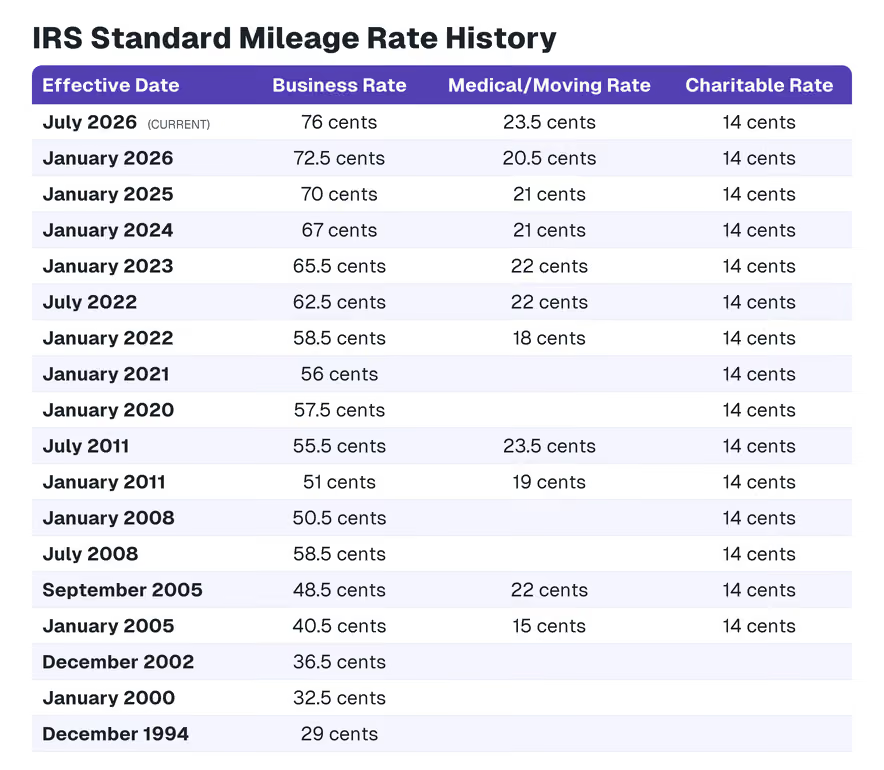
Since 1994, the business mileage rate has increased from 29 cents per mile to 76 cents per mile.
While that's a substantial jump overall, most annual updates have actually been fairly modest. In a typical year, the rate moves by just one to three cents as fuel, insurance, maintenance, depreciation, and other vehicle ownership costs gradually change.
The biggest jumps have been much less common.
Since the late 1990s, the IRS has made just five mid-year adjustments: in 2005, 2008, 2011, 2022, and 2026.
Each of those increases came after the cost of driving rose much faster than expected, prompting the IRS to update the rate before its usual January announcement.
Looking back at the history, a clear pattern emerges.
The mileage rate tends to climb steadily over time, with occasional spikes during periods of economic disruption or rapidly rising vehicle costs.
Understanding those patterns helps explain not just how the rate has changed, but why.
Why Does the IRS Standard Mileage Rate Change?
The IRS standard mileage rate isn't picked at random. Its goal is to reflect the average cost of owning and operating a personal vehicle for business, so the rate is reviewed and updated as those costs change over time.
Each year, the IRS bases the business mileage rate on studies of vehicle ownership and operating expenses.
That includes everything from fuel, insurance, and maintenance to tires, registration fees, licensing, and depreciation. Because these costs rarely stay the same from one year to the next, the mileage rate usually changes too.
Most updates happen once a year and take effect on January 1.
In most years, the adjustment is relatively small, often just a few cents per mile.
But when the cost of driving rises much faster than expected, the IRS has occasionally stepped in with a rare mid-year update to keep the rate in line with real-world driving costs.

How Has the IRS Standard Mileage Rate Changed Over Time?
Looking at the historical data, the rate hasn't increased in a straight line.
Instead, it has moved through periods of stability followed by periods of rapid growth, largely reflecting broader changes in vehicle ownership costs.
The 1990s: Slow and Steady
The 1990s were one of the most stable periods in the history of the IRS mileage rate.
Between December 1994 and January 2000, the business rate increased from 29 cents to 32.5 cents per mile.
Although the decade saw economic growth, the cost of driving remained relatively predictable.
Fuel prices were stable, inflation was modest, and vehicle ownership costs changed gradually, resulting in only small annual adjustments.
The Early 2000s: Costs Begin Rising
The early 2000s marked the beginning of a faster pace of increases.
By the end of 2002, the rate had reached 36.5 cents per mile, reflecting higher vehicle ownership and operating costs than those seen during the previous decade.
While annual increases remained modest, the trend signaled that the cost of driving was beginning to climb more quickly.
2005: The First Mid-Year Increase
The first major break from the IRS's usual schedule came in September 2005.
After starting the year at 40.5 cents, the business mileage rate increased to 48.5 cents per mile.
The reason was Hurricane Katrina.
The storm severely disrupted oil production and refining along the Gulf Coast, causing gasoline prices to spike across the United States within weeks.
Rather than waiting until the following January, the IRS increased the mileage rate to better reflect the higher cost of driving.
It was the first mid-year adjustment in decades.
2008: The Largest Increase in Modern History
Three years later, the IRS made another rare mid-year adjustment.
In July 2008, the business mileage rate jumped from 50.5 cents to 58.5 cents per mile, one of the largest single increases in the program's history.
Oil prices had surged during the first half of the year, pushing fuel costs well beyond what had been expected when the January rate was announced.
Although fuel prices later fell during the financial crisis, the mid-year increase remains one of the clearest examples of the IRS responding to rapidly changing driving costs.
The 2010s: A Decade of Stability
Compared with the previous decade, the 2010s were relatively stable.
Most annual changes were small, with the mileage rate moving only a few cents at a time as fuel prices and vehicle ownership costs changed gradually.
The biggest exception came in 2011.
2011: Another Mid-Year Adjustment
In July 2011, the IRS increased the business mileage rate from 51 cents to 55.5 cents per mile.
Higher oil prices during the first half of the year significantly increased fuel costs, prompting another rare mid-year adjustment.
Aside from that increase, the remainder of the decade saw relatively modest annual changes.
The 2020s: Rapid Cost Increases Return
The 2020s brought some of the largest increases in the history of the IRS mileage rate.
Supply chain disruptions, inflation, higher insurance premiums, rising maintenance costs, and fuel price volatility all contributed to higher vehicle ownership costs.
The IRS responded with another mid-year adjustment in 2022, increasing the rate from 58.5 cents to 62.5 cents per mile.
By 2024, the business mileage rate had climbed to 67 cents per mile, reflecting the continued rise in the cost of owning and operating a vehicle for work.
Just four years later, history repeated itself.
2026: Another Mid-Year Update
The 2026 mileage rate began the year at 72.5 cents per mile before increasing to 76 cents on July 1.
This mid-year adjustment reflected continued increases in fuel prices, insurance, maintenance, and other vehicle ownership costs during the first half of the year.
Like the other mid-year changes before it, the goal was to keep the mileage rate aligned with the real cost of driving.
2027: What to Expect Next
The 2027 IRS standard mileage rate has not yet been announced.
Based on the IRS's usual annual rate-setting schedule, we expect the 2027 business mileage rate to be announced around the start of the new year.
Once released, the new rate will give employers an updated benchmark for reimbursing employees who use their personal vehicles for work.
The July 2026 increase also makes the 2027 announcement one to watch. The IRS will be setting the next annual rate after a year in which the business mileage rate increased from 72.5 cents to 76 cents per mile midway through the year.
For organizations using Cents-Per-Mile (CPM) reimbursement or another program tied to the IRS standard mileage rate, the 2027 announcement will be an opportunity to review reimbursement policies and determine whether any updates are needed.
We’ll update this article when the IRS publishes the official 2027 standard mileage rate.
How Many Times Has the IRS Changed the Mileage Rate Mid-Year?
Since the late 1990s, the IRS has made only five mid-year adjustments.
While each increase happened under different economic circumstances, they all shared one thing in common: the cost of driving rose significantly after the annual mileage rate had already been announced.
What Does the History of the IRS Mileage Rate Tell Us?
The history of the IRS standard mileage rate shows that the IRS doesn't adjust the rate simply because gas prices rise or inflation increases.
Instead, the rate reflects the overall cost of owning and operating a vehicle, including fuel, insurance, maintenance, depreciation, and other expenses.
Most years, those costs change gradually, leading to modest annual updates. But when driving costs rise quickly, the IRS has shown it's willing to depart from its usual schedule and issue a mid-year adjustment.
Looking back at three decades of history, one trend is clear: the mileage rate has steadily increased over time as the cost of vehicle ownership has grown.
If your organization uses the IRS mileage rate to reimburse employees, staying on top of these changes is important.
Cardata helps businesses build and manage IRS-compliant vehicle reimbursement programs that keep employees fairly reimbursed while helping organizations stay compliant and control costs.
Talk to Cardata


.avif)
.jpg)
