
For years, company vehicles were the standard solution for employees who drove for work.
If someone spent time visiting customers, managing territories, or traveling between locations, they were often assigned a company car.
Today, many organizations are rethinking that approach.
Instead of owning or leasing passenger vehicles, they're moving drivers into vehicle reimbursement programs that pay employees for the business use of their personal vehicles.
For the right workforce, this can reduce costs and liability exposure, improve compliance, and create a better experience for employees.
But a fleet-to-reimbursement transition isn't right for every organization.
Some workforces still require company-owned vehicles. Others benefit from a combination of fleet and reimbursement programs.
The key is finding the vehicle program that matches how your employees actually drive.
Why Companies Are Moving Away From Company Fleets
When organizations start evaluating their vehicle programs, they usually uncover three common challenges: cost, risk, and employee experience.
1. Cost
Company fleets come with significant overhead, and need an intense level of administrative oversight.
Organizations are responsible for vehicle acquisition, depreciation, maintenance, insurance, registration, fuel management, accident administration, and replacement cycles.
Those expenses add up quickly.
Vehicle reimbursement programs work differently.
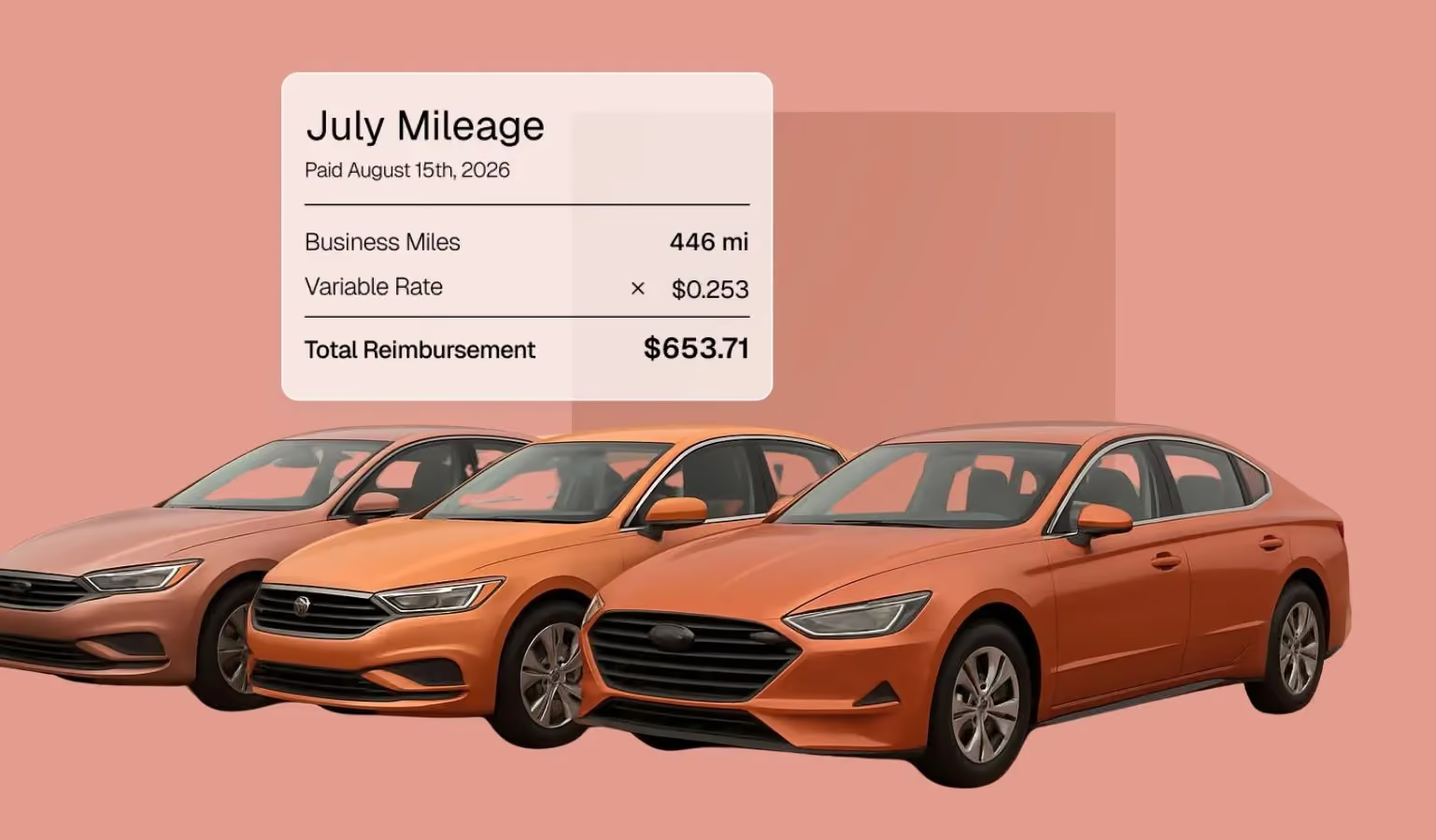
Instead of paying for the entire vehicle, companies reimburse employees for the costs associated with business driving. You're covering what's required for the job and nothing more.
According to Cardata's Fleet Market Survey 2026, participating organizations found company-owned fleets were approximately 30% more expensive than tax-free reimbursement alternatives for eligible passenger vehicle drivers.
The same survey found that an estimated 30% of eligible company vehicle programs are expected to transition to tax-free personal vehicle reimbursement by 2028.
2. Risk and Compliance
Cost often gets the most attention when companies evaluate their vehicle programs, but risk is becoming just as important.
When an organization owns or leases vehicles, it assumes liability for those assets around the clock.
If a fleet vehicle is involved in an accident, whether during business hours, on a weekend, or while being driven by a spouse or dependent, the company can still be exposed to significant financial and legal risk.
That responsibility extends far beyond simply providing vehicles.
Employers are responsible for maintenance, registration, insurance administration, accident management, and replacement planning, while also carrying the liability that comes with vehicle ownership.
Vehicle reimbursement programs shift much of that exposure away from the employer. Because employees drive and insure their own vehicles, their personal insurance policy becomes the first line of defense in most situations.
The employer is generally only drawn into claims involving business-related driving and major incidents.
For many organizations, this reduction in liability is just as compelling as the cost savings. It allows companies to reduce risk without shifting vehicle costs onto employees, since reimbursement programs are designed to help cover the region-specific costs of owning and operating a vehicle for work.
3. Driver Safety and Duty of Care
No matter what type of vehicle program you use, employees are still driving on behalf of your business.
That's why driver safety deserves its own attention.
Organizations have a responsibility to take reasonable steps to ensure employees driving for work meet basic requirements. That often includes verifying:
- Valid driver's licenses
- Active insurance coverage
- Vehicle eligibility requirements
- Vehicle inspection or maintenance requirements (if applicable)
- Compliance with company vehicle policies
Without clear processes in place, it can be difficult to know whether those requirements are being met consistently across a mobile workforce.
Many modern reimbursement programs include tools and processes that help organizations maintain visibility into driver compliance and required documentation.
That makes it easier to identify issues early, support safer driving practices, and demonstrate that appropriate compliance and risk management controls are in place.
At the end of the day, a vehicle program isn't just about reimbursement. It's also about helping employees get where they need to drive safely while giving the organization confidence that basic safeguards are being followed.
4. Employee Experience
Employees increasingly expect vehicle programs that are fair, transparent, and flexible.
And many employees appreciate the flexibility of driving a vehicle that fits their personal needs and preferences.
They also want confidence that they're being reimbursed accurately for the business driving they perform.
A well-designed reimbursement program can provide both.
When reimbursement reflects actual business driving, employees often feel the program is more equitable and easier to understand.
Is a Mileage Reimbursement Program Right for Your Workforce?
Before transitioning away from fleet vehicles, it's important to consider whether reimbursement is actually the right fit.
Many organizations find that a mixed fleet strategy works best. In fact, lots of organizations operate what's known as a grey fleet, a mix of company-owned vehicles and employees using personal vehicles for work.
This approach allows businesses to keep fleet vehicles where they're truly needed while moving other eligible drivers into reimbursement programs.
How to Transition From Fleet Vehicles to Vehicle Reimbursement
A successful transition starts with understanding your current program and your drivers.
Step 1: Take a Close Look at Your Current Vehicle Program
Before making any changes, it's important to understand exactly where your current program stands today.
Start by looking beyond the monthly vehicle payment and consider the full picture.
What are you spending on maintenance, insurance, fuel, administration, and vehicle replacement? How much time is your team spending managing the program? Are there recurring issues or complaints from employees?
It's also important to look at how much employees are actually driving. As territories, customer bases, and job responsibilities evolve, business mileage can change significantly over time.
A role that once justified a dedicated fleet vehicle may no longer generate enough mileage to make that investment cost-effective. Understanding vehicle utilization is often one of the most important steps in determining whether a fleet is still the right fit.
This is also a good opportunity to evaluate how well the program is meeting your business goals. A fleet that made sense five or ten years ago may not be the best fit for how your workforce operates today.
The goal isn't to find fault with your current program. It's to build a clear picture of where things stand today.
Once you understand your costs, vehicle utilization, administrative workload, and driver experience, it becomes much easier to determine whether change makes sense and where there may be opportunities to improve efficiency, reduce costs and risk, or better support your drivers.
Step 2: Understand How Your Employees Actually Drive
Once you have a clear picture of your current program, the next step is understanding your drivers.
Not every employee uses a vehicle in the same way. Some spend most of their workweek on the road, while others only drive occasionally. Some cover large territories and rack up thousands of business miles each month. Others stay close to home and make only a handful of customer visits.
These differences matter because vehicle programs should reflect how employees actually use their vehicles for work.
Taking the time to understand driving patterns, job responsibilities, and mileage requirements will help you determine what kind of reimbursement approach makes the most sense for different groups of employees.
Step 3: Choose a Program That Fits Your Workforce
One of the most common mistakes organizations make is choosing a reimbursement program before they understand their drivers.
A better approach is to start with employee driving behavior and then build a program around it.
For example, employees who drive occasionally may be well suited to a Cents-Per-Mile (CPM) reimbursement model.
Higher-mileage drivers often benefit from more customized reimbursement programs like Fixed and Variable Rate (FAVR), while other employees may be better served by a Tax-Free Car Allowance (TFCA).
In many organizations, there isn't a single solution for everyone.
Different employee groups may have different driving patterns, making a combination of reimbursement programs the most practical and cost-effective approach.
The goal is to align reimbursement with real business driving so employees are compensated fairly and the organization only pays for what is actually needed.
Step 4: Create a Rollout Plan and Communicate Early
Once you've designed your new program and aligned your leadership team around the change, it's time to focus on implementation.
Reaching internal agreement on the business case, program design, and rollout plan before communicating with employees helps ensure a consistent message and builds confidence in the transition.
From there, a successful rollout depends as much on communication as it does on program design.
Employees need to understand what's changing, why the change is happening, and how the new program will work.
This often includes updating vehicle policies, introducing mileage tracking tools, training managers, and helping drivers understand their reimbursement structure before the program launches.
The more clearly expectations are communicated upfront, the smoother the transition tends to be.
For many employees, moving away from a fleet vehicle can feel like a significant change. That's why it's important to focus on how the new program supports them.
When employees understand the benefits and feel confident in the process, the transition is much more likely to feel like an upgrade rather than a burden.
What Should You Do With Existing Fleet Vehicles?
For organizations reducing or eliminating fleet vehicles, there are several common approaches.
1. Offer Employees the Opportunity to Purchase Their Vehicle
Some organizations offer employees the option to buy the company vehicle they've been driving. Because employees are already familiar with the vehicle, this can be an attractive option for both parties.
2. Return Leased Vehicles
For leased fleets, transitioning may simply involve allowing leases to expire or returning vehicles according to existing contract terms.
3. Sell Vehicles as They Reach End of Life
Many companies gradually reduce fleet size by retiring vehicles as they reach the end of their normal lifecycle. This allows the transition to happen naturally while minimizing disruption.
4. Use a Phased Approach
Not every driver needs to transition immediately. Some organizations move new employees into reimbursement programs while allowing existing drivers to remain in fleet vehicles until natural replacement cycles occur.
How to Help Employees Embrace the Change
For many employees, moving away from a company vehicle can feel like a significant change. That's why clear communication is one of the most important parts of any transition.
Employees want to understand what is changing, why the change is being made, how the new reimbursement program works, and, most importantly, what it means for them financially.
For most drivers, the first question is simple: "How much am I going to get paid?"
Their answer to that question often shapes how fair they perceive the program to be and even influences the type of vehicle they feel they can afford to drive.
When those questions go unanswered, uncertainty can quickly turn into resistance. The most successful transitions focus on the employee experience, not just organizational cost savings.
When drivers understand they'll be reimbursed fairly for the business use of their vehicle, have visibility into how reimbursement amounts are calculated, and gain access to simple mileage tracking and support tools, they're much more likely to embrace the change.
Combined with greater flexibility in vehicle choice and a reimbursement structure that reflects real driving activity, the new program starts to feel like a benefit rather than a disruption.
The goal is for employees to see the new program as an improvement to their day-to-day experience, not another administrative burden.
Why the Right Transition Partner Matters
A fleet transition involves more than selecting a reimbursement program. It also requires:
- Building a clear business case that aligns stakeholders around the opportunity
- Educating leadership teams on the financial, operational, and risk impacts of the change
- Program design
- Policy creation
- Employee communications
- Compliance support
- Driver onboarding
- Mileage tracking implementation
- Fleet offloading strategies
Having the right partner can make the process significantly easier.
Rather than managing every piece internally, organizations can work with a provider that supports the entire transition.
That starts by helping program champions build the business case and equip leadership with the information they need to make an informed decision.
Once the organization is aligned, the focus shifts to implementation, including program design, employee communications, driver onboarding, and ongoing compliance support.
The result is a guided transition from the initial conversation through rollout and beyond, making change management as straightforward as possible.
Building a Vehicle Program That Fits How Your Team Drives Today
Transitioning from a fleet to a mileage reimbursement program is an opportunity to rethink how your organization supports employees who drive for work.
The most effective vehicle programs are built around the realities of day-to-day driving, aligning reimbursement with employee needs, business goals, and the way work gets done in the field.
For many organizations with passenger vehicle drivers, reimbursement programs provide a more cost-efficient, compliant, and scalable alternative to traditional fleets.
For others, a mixed approach may be the better solution.
The most successful vehicle programs aren't built around vehicles alone. They're built around the people who use them, the work they perform, and the goals the business is trying to achieve.
When those pieces align, reimbursement becomes more than a payment model. It becomes a long-term strategy for supporting a mobile workforce.
Wondering whether it's time to replace your company fleet with a mileage reimbursement program? Talk to the team at Cardata to evaluate your current vehicle program and determine which approach best fits your workforce.
Talk to Cardata

.jpg)
.jpg)
.jpg)
