.jpg)
When employees use their personal vehicles for work in Illinois, mileage reimbursement is more than an HR or Finance policy decision.
Illinois law generally requires employers to reimburse employees for qualifying expenses they incur while doing their jobs.
That can include costs associated with required or authorized business use of a personal vehicle.
For employers, the important questions are straightforward: When is mileage reimbursement required in Illinois? What rate should you use? What records should employees keep? And how can you structure reimbursement so it works under both Illinois law and federal tax rules?
Here’s what employers and drivers should know in 2026.
Is Mileage Reimbursement Required In Illinois?
In many circumstances, yes.
Under Section 9.5 of the Illinois Wage Payment and Collection Act, employers must reimburse employees for necessary expenditures or losses incurred within the scope of employment and directly related to services performed for the employer.
The law defines necessary expenditures as reasonable expenses or losses required of the employee in the discharge of employment duties that primarily benefit the employer.
For employees who drive personal vehicles for work, that can make vehicle expenses reimbursable when the driving is required or authorized by the employer.
Think about a sales representative traveling between customer meetings, a field service employee visiting job sites, or another driver using a personal vehicle to perform required work.
Those situations are different from an employee's ordinary commute between home and their regular workplace.
Illinois regulations provide several factors for determining whether an expense primarily benefits the employer, including whether the expense is necessary to perform the employee's duties and whether the employer is receiving something of value that it would otherwise need to pay for.
The circumstances and the employer's written reimbursement policy still matter, so organizations should have their policies reviewed by appropriate legal or tax professionals when necessary.
What Is The Illinois Mileage Reimbursement Rate For 2026?
There is no single state-mandated cents-per-mile rate for private employers in Illinois.
This is an important distinction because the IRS standard mileage rate is often referred to as the "Illinois mileage reimbursement rate."
It is actually a federal optional standard mileage rate rather than a mileage rate established by Illinois law.
For 2026, there are two IRS business mileage rates:
- January 1 through June 30, 2026: 72.5 cents per mile
- July 1 through December 31, 2026: 76 cents per mile
The IRS originally set the 2026 business rate at 72.5 cents per mile.
It later increased the rate to 76 cents for qualifying business transportation expenses incurred on or after July 1, 2026, citing recent volatility in fuel prices.
So, if you're searching for the current Illinois mileage rate in September 2026, 76 cents per mile is the current IRS business standard mileage rate.
That does not mean every Illinois private employer must pay exactly 76 cents for every business mile.
Does Illinois Require Employers To Use The IRS Mileage Rate?
No. Illinois law does not establish the IRS standard mileage rate as the required reimbursement rate for private employers.
Instead, Illinois law requires reimbursement of qualifying necessary expenditures.
Employers may establish written policies that include specifications or guidelines for necessary reimbursable expenses.
Those policies can set reasonable limits, but Illinois law does not allow an employer to establish a policy that provides for no reimbursement or only de minimis reimbursement.
Illinois regulations also address how those policies operate when an employer authorizes or routinely allows expenses above its written limits.
That gives employers flexibility to choose a vehicle reimbursement method that makes sense for their workforce, provided the program satisfies applicable Illinois requirements.
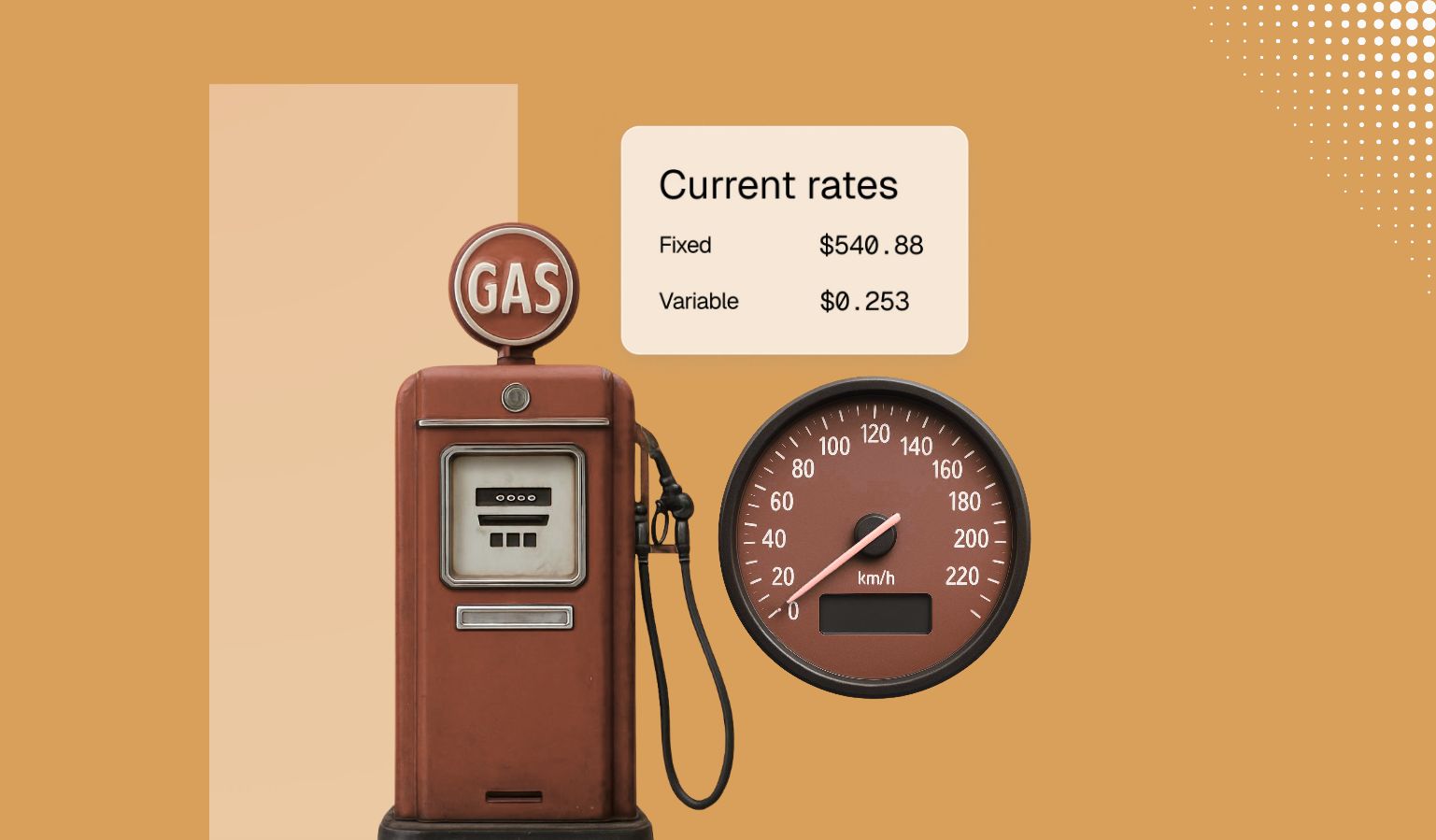
For example, an employer might reimburse employees through a Cents-Per-Mile (CPM) program. Other organizations may use Fixed and Variable Rate (FAVR) reimbursement or a Tax-Free Car Allowance (TFCA).
Each approach reimburses employees for the real, business-required cost of owning and operating a personal vehicle for work, but the way those costs are calculated and administered differs.
What Vehicle Expenses Can Be Reimbursed In Illinois?
Illinois law does not provide a simple checklist of vehicle expenses that every employer must reimburse.
Instead, the law focuses on whether an expense is a qualifying "necessary expenditure."
The cost of using a personal vehicle for business can involve fuel, maintenance, insurance, depreciation, registration, and other ownership and operating expenses.
A properly designed reimbursement program can account for those costs without requiring employers to separately reimburse every individual expense.
For example, CPM applies a set rate to each qualifying business mile. FAVR takes a different approach by separating the fixed costs of owning a vehicle from the variable costs associated with driving it for work.
The right structure depends on factors such as how much employees drive, where they drive, their job requirements, and the reimbursement method the employer chooses.
What Records Are Required For Illinois Mileage Reimbursement?
Good documentation is important under both Illinois law and federal tax rules.
Illinois law generally requires employees to submit necessary expenditures with appropriate supporting documentation within 30 calendar days after incurring the expense, unless the employer's written policy provides additional time.
Employers also have recordkeeping responsibilities. Illinois regulations require employers to retain certain reimbursement records for three years, including:
- Reimbursement policies
- Employee reimbursement requests
- Documentation showing approval or denial
- Documentation showing reimbursement and supporting records
These requirements make a consistent mileage tracking process especially useful for employers with larger field teams.
Federal tax rules add another layer.
IRS Publication 463, Travel, Gift, and Car Expenses explains the substantiation requirements for business vehicle expenses.
Adequate mileage records generally establish details including when the travel occurred, where the employee went, the business purpose, and the mileage involved.
For a driver, recording business mileage consistently helps support an accurate reimbursement. For the employer, those records create a clearer audit trail and make program administration easier.

Are Mileage Reimbursements Taxable?
Properly structured mileage reimbursements can generally be paid without being treated as employee wages for federal income tax purposes.
The key is the IRS accountable-plan framework.
According to IRS Publication 463, an accountable plan must satisfy three basic requirements:
- The expenses must have a business connection.
- The employee must adequately account for the expenses within a reasonable period.
- The employee must return any excess reimbursement or allowance within a reasonable period.
When those requirements are met, qualifying reimbursements generally aren't reported as pay.
If the accountable-plan requirements are not satisfied, some or all of the reimbursement may instead be treated as wages.
This distinction matters when designing an Illinois mileage reimbursement program.
State law determines when an employer has a reimbursement obligation, while federal tax rules help determine how those payments are treated for tax purposes.
What Should An Illinois Mileage Reimbursement Policy Include?
A good policy should make reimbursement easy for employees to understand and practical for managers to administer.
At a minimum, employers should clearly explain what types of business driving qualify, how employees should capture mileage, what reimbursement method applies, when expenses must be submitted, and what supporting documentation is required.
The policy should also reflect the realities of the workforce.
An employee driving several thousand business miles each year has a different cost profile from someone who occasionally uses a personal vehicle for a customer visit.
For companies with different types of drivers, applying one reimbursement structure across the entire workforce may not always produce the most appropriate result.
Illinois also specifically recognizes written expense reimbursement policies. That makes having a clear policy an important part of setting expectations around eligible expenses, documentation, submissions, and reimbursement.
The goal is a process employees can follow consistently and administrators can manage confidently.
What Happens If An Illinois Employer Does Not Reimburse A Required Expense?
Failure to pay amounts required under the Illinois Wage Payment and Collection Act can carry financial consequences.
Under Section 14 of the Act, an employee who is not timely paid qualifying amounts required by the Act may recover the underpayment and damages equal to 5% of the underpayment for each month it remains unpaid.
In a civil action, the employee may also recover costs and reasonable attorney's fees.
That 5% figure is part of the broader Wage Payment and Collection Act's remedies. It is not a special mileage-specific penalty.
For employers, a clear reimbursement process can reduce the chance of disputes in the first place.
Written policies, accurate mileage records, consistent approvals, and timely reimbursements give employees and managers a common process to follow.
Choosing A Mileage Reimbursement Program In Illinois
Illinois employers have several ways to structure reimbursement for employees who drive personal vehicles for work.
Fixed and Variable Rate (FAVR) reimbursement separates the fixed and variable costs associated with owning and operating a personal vehicle for business. When structured according to IRS requirements, FAVR can provide tax-free reimbursement to compliant drivers and can be a good fit for employees with regular business driving.
Cents-Per-Mile (CPM) reimburses employees based on their substantiated business mileage. CPM is straightforward to understand and can work particularly well for employees with lower or less predictable business mileage.
Tax-Free Car Allowance (TFCA) is an accountable-plan approach that can provide a structured reimbursement while using substantiated business mileage and applicable IRS requirements to determine tax treatment.
Organizations with different employee populations can also use a mixed reimbursement program, assigning different methods to drivers based on their roles and driving patterns.
The best approach depends on the workforce.
What matters is creating a reimbursement structure that reflects employees' business driving while giving Finance, HR, and Operations teams clear visibility into costs, records, and compliance.
Make Illinois Mileage Reimbursement Easier To Manage
Illinois employers need to account for qualifying business expenses when employees use personal vehicles for work. They also have flexibility in how they build and administer their reimbursement programs.
A clear written policy is a good starting point.
Accurate mileage capture, appropriate reimbursement methods, reliable documentation, and consistent administration can make the program easier for employees to use and easier for the business to defend.
Cardata helps companies design and administer mileage reimbursement programs for employees who drive personal vehicles for work.
Our fully managed approach brings together mileage capture, reimbursement calculations, payments, compliance support, and reporting so Finance, HR, and Operations teams have a clearer way to manage driving for work.
If you're reviewing your Illinois mileage reimbursement policy or evaluating whether your current program still fits your workforce, talk to Cardata about building a fair, compliant, and practical mileage reimbursement program.
Talk to Cardata