.avif)
If your employees drive for work, where they drive matters just as much as how much they drive.
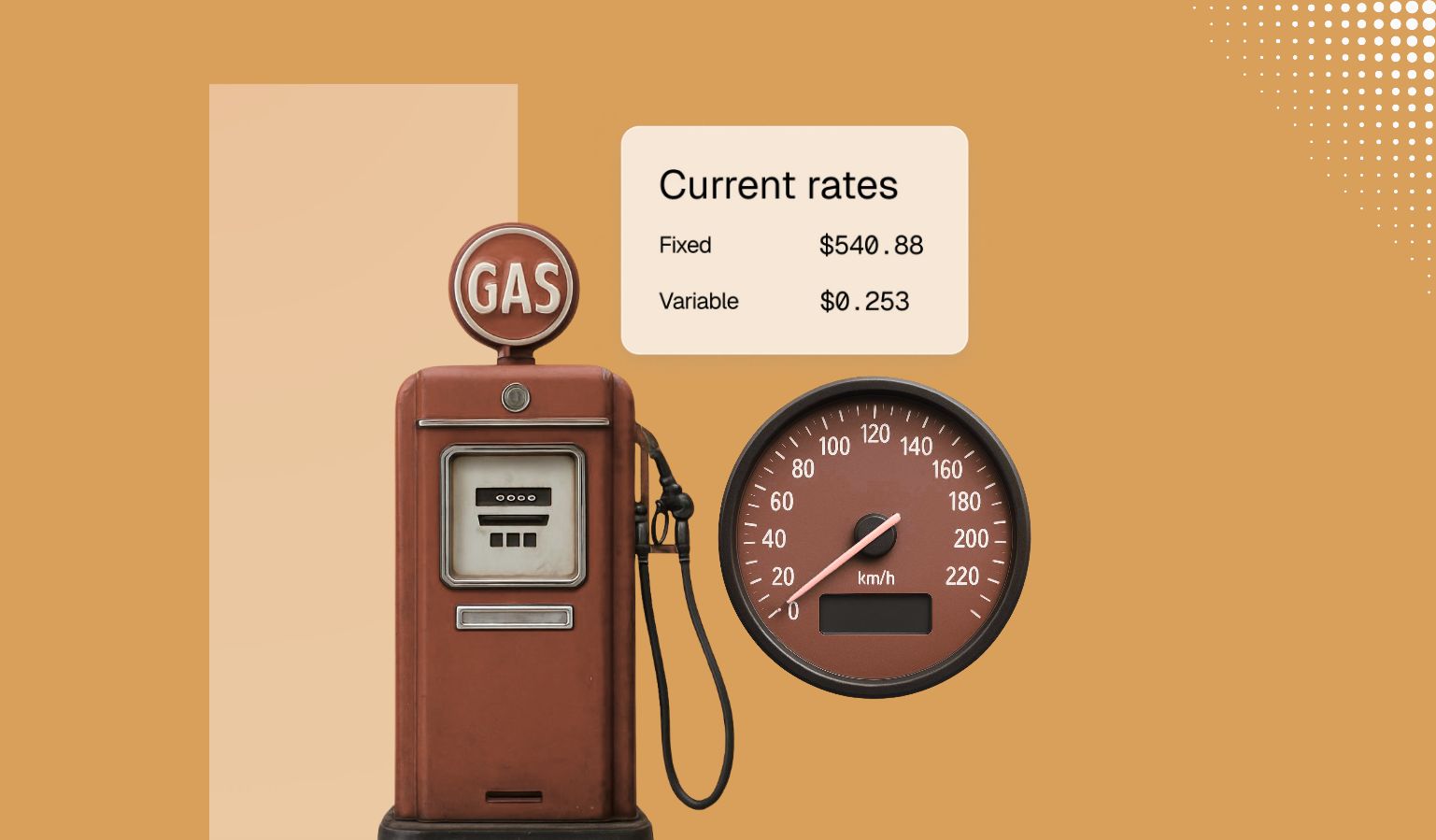
That idea sits at the center of a Fixed and Variable Rate (FAVR) program. Instead of using one national rate, FAVR looks at geography to build a reimbursement that reflects real driving costs.
In this guide, we’ll walk through how location shapes a FAVR program, why it matters for accuracy and fairness, and how companies use geographic data to design better reimbursement strategies.
What is a Base Locality in FAVR?
At the core of any FAVR program is something called a “base locality.”
This refers to the defined geographic area used to calculate an employee’s reimbursement rates. It’s tied to their driving activity and is usually based on where they live, where they work, or where they spend most of their time on the road.
In practice, base locality also determines how different types of costs are calculated. Fixed costs are typically tied to the employee’s garaging location, most often their home, since that’s where expenses like insurance, registration, and taxes are determined.
Variable costs may reflect where the employee actually drives, using assigned territories or mileage-weighted geography to account for differences in fuel prices, maintenance costs, and road conditions.
This matters because vehicle costs aren’t the same everywhere. Fuel prices, insurance rates, taxes, and even driving conditions can vary quite a bit from one region to another.
To account for that, FAVR programs use cost databases that assign regional values to inputs like fuel, insurance, and depreciation, which are then used to calculate both fixed and variable rates.
For example, a driver based in New York City will likely face higher insurance premiums, registration costs, and fuel prices than someone driving in a smaller city or rural area. Even factors like traffic congestion and parking can influence overall driving costs.
By anchoring FAVR reimbursement to a clearly defined base locality, companies can align reimbursements with real-world costs instead of relying on averages that may not reflect what employees actually spend.
How Fixed and Variable Costs Use Geography
Under FAVR program requirements, reimbursement is split into two parts, each using location in a different way.
Fixed costs are tied to where employees live.
Fixed costs include expenses that do not change much month to month. These include:
- Depreciation or lease payments
- Insurance
- Registration and licensing fees
- Personal property taxes
These costs are usually based on the employee’s home location. Insurance premiums and taxes are set locally, so using the employee’s residence gives a more accurate picture of what they actually pay to own a vehicle.
Variable costs are tied to where employees drive.
Variable costs change based on usage. These include:
- Fuel
- Maintenance
- Repairs
For these expenses, FAVR looks at where the driving happens. An employee who travels across different regions may face different fuel prices or road conditions than someone who stays local. By tying variable rates to driving location, FAVR reflects those differences.
Where FAVR Is Most Common
FAVR programs are used across the United States, but some regions see higher adoption than others.
States like California, Florida, Georgia, North Carolina, Ohio, Tennessee, and Texas have a high concentration of FAVR drivers.
There are a few reasons for this.
First, these states have large and active economies. Many roles involve travel, whether it’s sales, field service, or site visits.
Second, geography plays a role. Larger states often require employees to cover longer distances. That increases the importance of accurate reimbursement.
Finally, different industries drive demand in different regions. For example:
- California sees frequent business travel tied to tech and entertainment
- Florida supports travel-heavy roles in tourism
- Georgia’s film industry requires frequent movement between locations
- Texas combines long distances with multiple industries that rely on driving
Across all of these cases, FAVR works because it adjusts to the local reality instead of applying a one-size-fits-all rate.
Is FAVR Available Everywhere?
No, FAVR programs are only applicable within the United States, because they are designed specifically around IRS rules.
The structure of FAVR, including how fixed and variable costs are calculated and reimbursed tax-free, depends on IRS guidance. These rules define how employers can reimburse employees for business driving without creating taxable income.
Because those tax frameworks are unique to the U.S., the same model doesn’t work in other countries.
That said, companies operating in Canada have options. There are reimbursement programs built to align with Canada Revenue Agency requirements, using a similar goal of matching payments to real driving costs, but structured to meet Canadian tax rules.
Why FAVR Is More Geographic Than Cents-Per-Mile (CPM)
The biggest difference between FAVR and a CPM program comes down to how they treat location.
CPM programs are typically based on the IRS standard mileage rate, which sets a single national benchmark for reimbursement. Every driver gets the same amount per mile, no matter where they live or work.
That simplicity is appealing, but it ignores real cost differences. Fuel might be cheap in one region and expensive in another. Insurance and maintenance costs can also vary widely.
FAVR takes the opposite approach. It builds reimbursement using location-specific data.
That means:
- Drivers in higher-cost areas are not underpaid
- Drivers in lower-cost areas are not overpaid
- Reimbursement better reflects actual expenses
In practice, this leads to a more balanced and fair outcome across a distributed workforce.
The Role of Data in FAVR Rate Design
Geography only works if the data behind it is accurate.
FAVR programs rely on up-to-date information about regional costs. This includes things like fuel prices, insurance rates, and vehicle expenses.
Without reliable data, it becomes difficult to set rates that reflect real conditions.
That’s why many companies turn to software tools, like mileage tracking solutions, to manage FAVR calculations. These tools pull in regional cost data, calculate both fixed and variable rates, and help keep mileage reimbursement aligned with current conditions.
The goal is consistency. When rates are based on strong data, companies can avoid guesswork and reduce the risk of overpaying or underpaying drivers.
Why Geography Matters for Fair Reimbursement
At a high level, FAVR is about precision, accuracy, and fairness, all while maintaining FAVR compliance under IRS rules.
When reimbursement reflects real costs, employees are less likely to feel like they are covering business expenses out of pocket. At the same time, companies avoid paying more than necessary.
Geography is what makes that possible.
Instead of treating all employees who drive the same, FAVR recognizes that costs vary. It adjusts for those differences in a structured way that aligns with IRS guidelines.
Why Geography Makes FAVR a Smarter Reimbursement Model
FAVR programs work because they reflect how driving actually works in the real world.
Costs are not the same everywhere. Fuel prices change by region. Insurance rates vary by location. Driving conditions differ from one area to another.
By using geography as the foundation, FAVR creates a mileage reimbursement model that matches those realities.
For companies managing a mobile workforce, that level of precision can make a meaningful difference in both cost control and employee experience.
If you’re looking to move beyond flat rates or one-size-fits-all reimbursement, Cardata can help you build a FAVR program that reflects where your employees drive and what it actually costs them.
Talk to Cardata