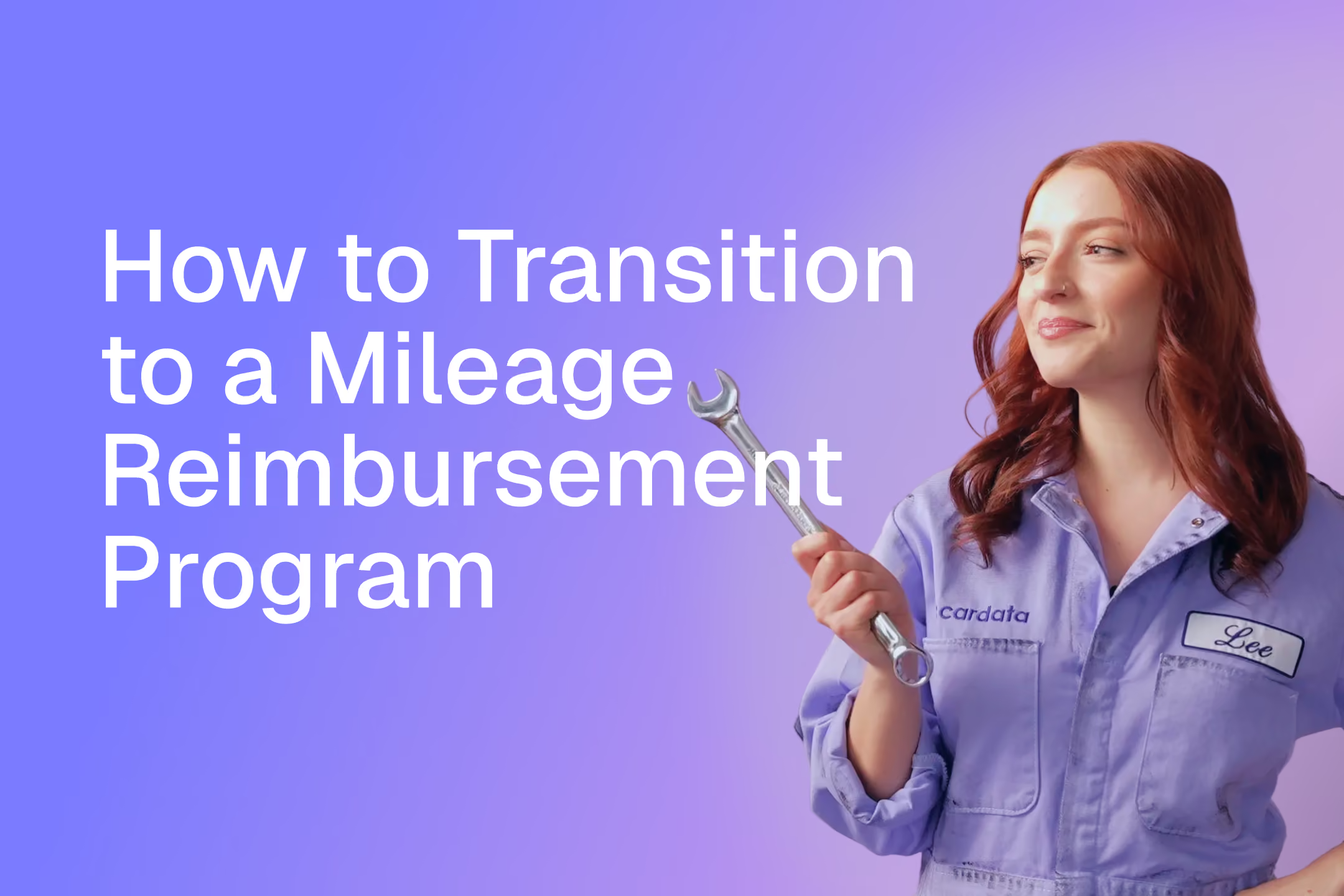
Hi! I’m Lee, and I’m your mileage mechanic from Cardata.
I’m here to help you understand your mileage
reimbursement options, fix what's not working, and keep your program running smoothly.
Whether you’re coming from company vehicles…a flat car allowance, or even another provider, switching your mileage program can feel like a big move.
Today I am joined by my colleague Alan, a fellow fleet expert, to help make sure your program transition doesn't …. fall short.
Let’s break down the process.
Why Companies Make the Switch
Most companies start by exploring their options. And once they do, gaps in their current program become hard to ignore.
It usually comes down to three things.
First, cost.
With company fleet programs, you’re covering every cost that comes with those vehicles. And while car allowance programs are simple, a large portion gets lost to taxes.
With reimbursement, you’re covering only the costs required for the job, nothing more, nothing less.
Second, risk and compliance.
Fleet vehicles carry risk around the clock.
When the company owns the vehicle, they own the liability, even when an employee is using their vehicle for personal use.
A structured reimbursement program helps to reduce exposure by shifting primary coverage to the driver’s policy, while keeping your business compliant and audit-ready.
Car allowances create a different kind of risk.
Because they aren’t tied to actual driving, they can be hard to defend. And outdated, manual processes can leave growing compliance gaps.
A structured, tech-enabled program gives you clear records and better control.
Finally, employee experience.
Employees want fair, accurate reimbursement and the freedom to drive the vehicle that works best for them, while keeping more of what they earn.
With the right partner and technology in place, your mileage reimbursement program can run smoothly and stay compliant.
How to Transition Your Vehicle Program
Whether you’re switching from a car allowance, another vendor, or a company fleet, the process is the same.
First, get a clear picture of where you are today.
Look at your current costs, how your program is being managed, and where things are starting to break down.
Second, understand your drivers.
Who’s putting on high mileage? Who drives occasionally? What are their roles? This is what determines whether CPM, TFCA, FAVR, or a mix makes the most sense.
Then, work with your provider to align your program with how your team actually drives and what your business is trying to achieve.
Finally, plan the rollout.
You’ll need to set a transition timeline and communicate clearly with your team.
This includes building updated vehicle policies and training the team on their new reimbursement structure to make sure everyone knows what’s changing and why.
If you’re moving from a fleet, you can start by selling or returning vehicles as they reach the end of their lifecycle.
Some companies also give employees the option to purchase their vehicles.
And if you’re switching providers, it’s usually less about starting over and more about improving what you already have.
The goal is to keep your program running smoothly while things are updated behind the scenes.
That might include migrating data, improving your tracking and reporting, tightening up compliance, and strengthening support.
People get used to how things work today. So the key is keeping the new program simple and clear from the start: what it is, how it works, and why it’s better for them.
At the end of the day, it comes down to helping employees understand what they’re getting out of it.
When that’s clear, the change doesn’t feel like a burden. It feels like an upgrade.
And with a company fleet, that change can feel even bigger.
That’s where having the right partner, like Cardata, makes a difference.
Here at Cardata, our goal is to help you design the right program, guide the transition, and keep everything running smoothly as things change over.
We support you through the whole transition, from fleet offloading to employee communications and onboarding.
As you launch your reimbursement program, Cardata is here to help every step of the way.
The Key Takeaway
When you zoom out, the big idea is this:
Transitioning your program is really about building a system that fits how your team drives today and scales as you grow.
That’s how mileage reimbursement becomes cost-efficient, compliant, and built to support your team.
And if you need help getting there? Well, that’s exactly what your mileage mechanic is here for.
Talk to Cardata