The IRS increased the standard mileage rate to 76¢ per mile effective July 1, 2026, raising new questions for employers and employees alike.
Should you update your mileage reimbursement program? Do higher fuel prices mean reimbursements should increase? And how do different reimbursement methods respond to changing vehicle costs?
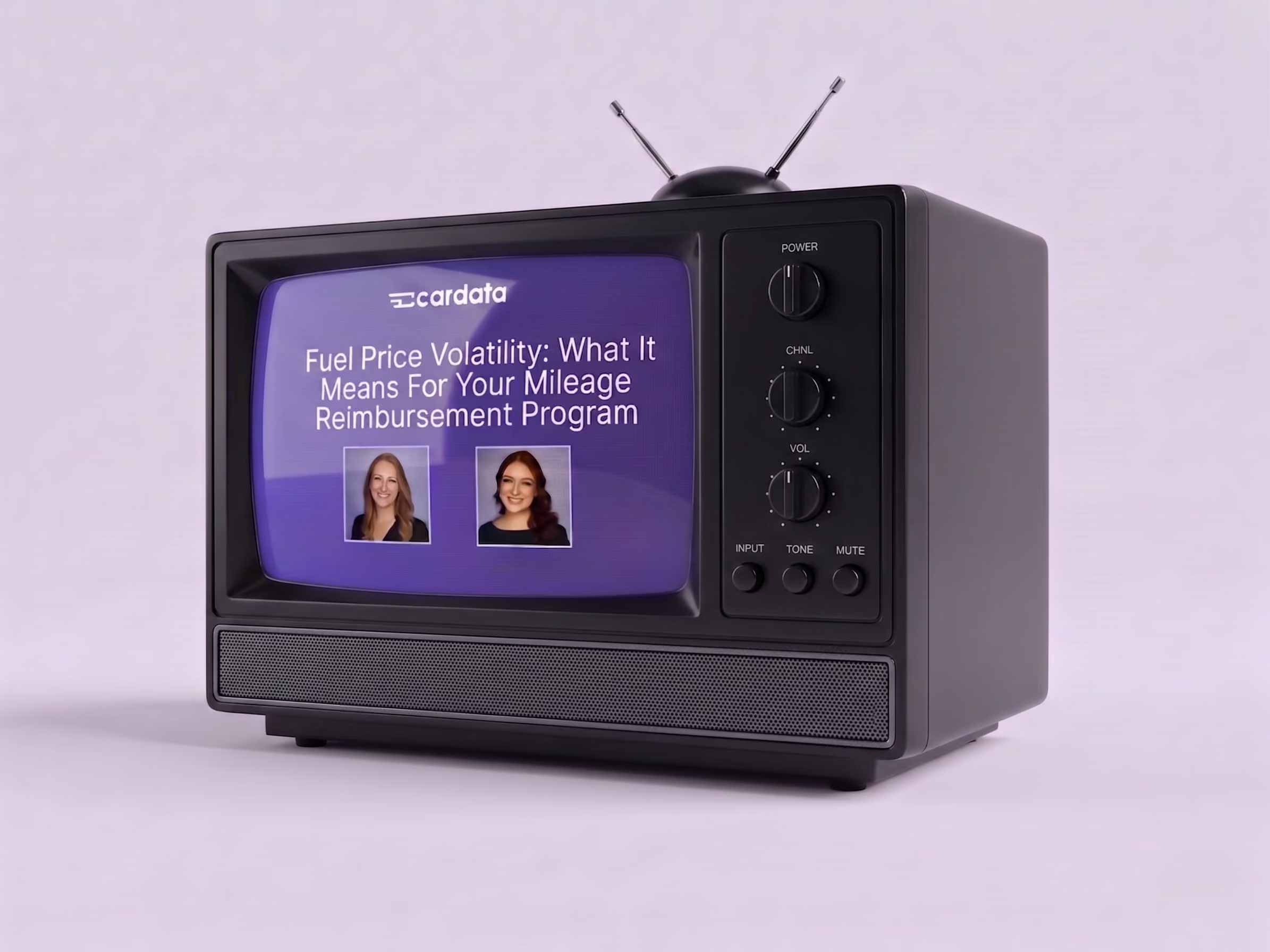
In this webinar, Cardata's Lee Adam, Director of Product Marketing, and Madeleine Beelen, Director of Customer Success, explain what today's fuel price volatility means for vehicle reimbursement programs and how organizations can evaluate their current approach.
From understanding the factors behind the IRS rate increase to comparing how different reimbursement methods respond to changing costs, this session offers practical guidance for employers navigating an unpredictable fuel market.
What You'll Learn in This Webinar
- Why the IRS made a rare mid-year mileage rate change
- What's driving fuel price volatility in 2026
- Why fuel is only one part of the total cost of driving
- How FAVR, CPM, Tax-Free Car Allowance (TFCA), flat car allowances, and company fleets respond to changing fuel costs
- When your reimbursement program should (and shouldn't) be updated
- How to answer employee and leadership questions about rising fuel prices
- A practical framework for evaluating your vehicle reimbursement strategy
Should Employers Adjust Mileage Reimbursement When Fuel Prices Rise?
Rising fuel prices can increase the cost of driving for work, but that doesn't necessarily mean every employer needs to increase reimbursements.
Fuel is just one component of the total cost of owning and operating a vehicle. Insurance, maintenance, depreciation, and other expenses also play a role in determining how much employees should be reimbursed.
The right approach depends on your reimbursement program. For example, Fixed and Variable Rate (FAVR) programs can account for changes in fuel costs through their variable reimbursement component, while Cents Per Mile (CPM) programs may require employers to review whether their existing rate still makes sense.
Rather than reacting to every fuel price fluctuation, employers should evaluate their program against actual driving patterns, vehicle costs, and employee needs.
The big takeaway: Higher fuel prices don't automatically mean your mileage reimbursement program needs to change. The goal is to understand how your current program responds to changing costs and whether it continues to provide fair, accurate, and sustainable reimbursements.
Whether you're responsible for Finance, HR, Operations, Fleet, or managing a vehicle reimbursement program, this webinar will help you make more informed decisions about your vehicle reimbursement strategy.
Talk to Cardata