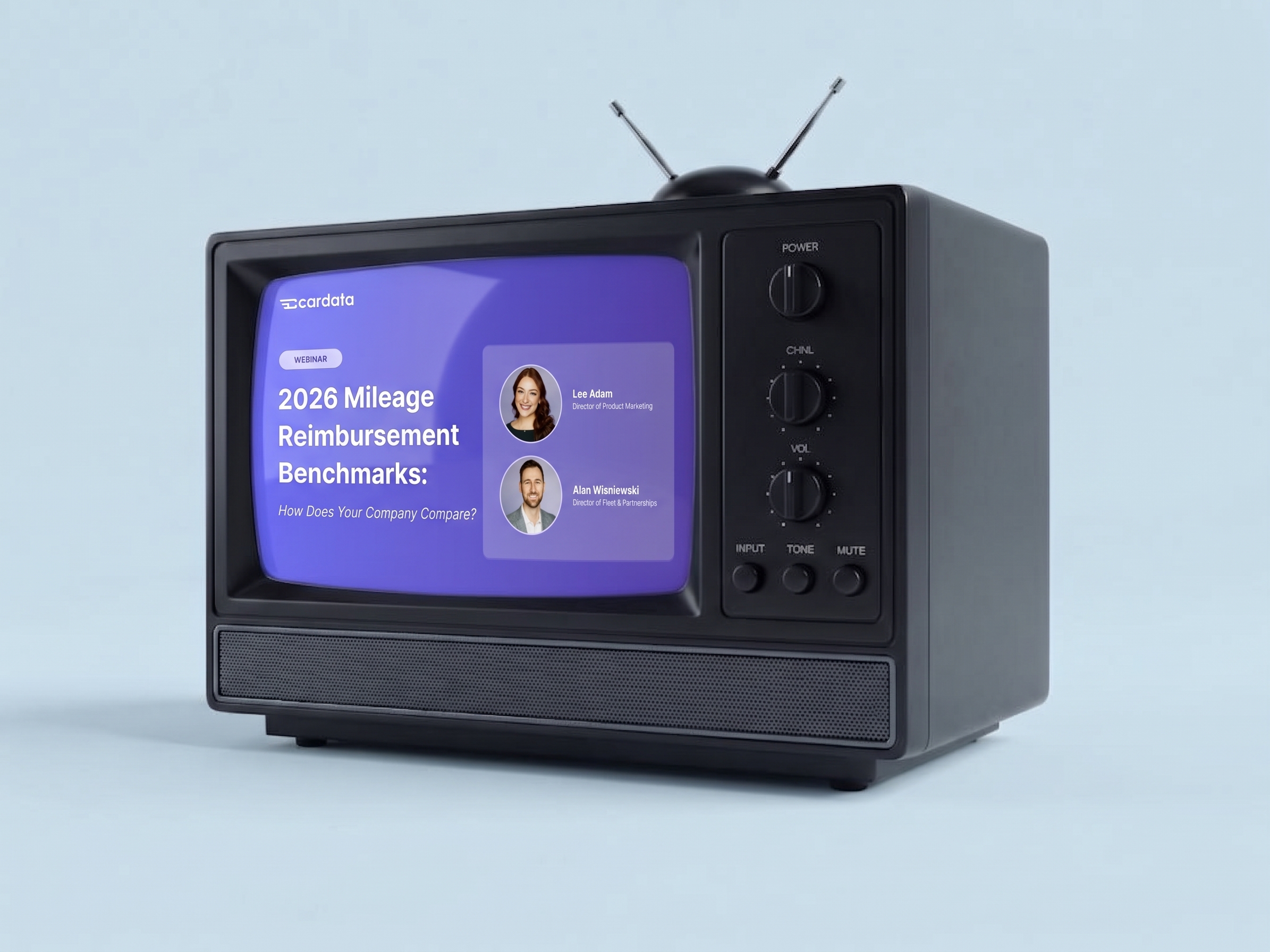
How does your company’s mileage reimbursement program compare in 2026?
In this webinar, Cardata’s Lee Adam, Director of Product Marketing, and Alan Wisniewski, Director of Fleet and Partnerships, break down findings from Cardata’s 2026 Mileage Reimbursement Benchmark Report, based on anonymized reimbursement data from thousands of drivers across the U.S.
They explore what’s changing in vehicle reimbursement, what’s driving higher costs, and how companies can use benchmarking data to evaluate their own programs.
From rising reimbursement costs to differences across programs, industries, and regions, this session offers a closer look at the trends shaping vehicle reimbursement in 2026 and what they mean for employers.
What You'll Learn in This Webinar
- How average mileage reimbursement and business mileage changed in 2026
- How FAVR, Cents Per Mile (CPM), and Tax-Free Car Allowance (TFCA) programs compare
- Why high-mileage and occasional drivers may need different reimbursement approaches
- How reimbursement costs vary by job function and geography
- How company fleet costs compare with vehicle reimbursement
- How to use benchmarks to identify opportunities to adjust and optimize your program
- What metrics companies should monitor as driving patterns and vehicle costs change
How Can Employers Use Mileage Reimbursement Benchmarks?
Benchmarking gives employers a starting point for evaluating whether their current vehicle reimbursement program is working as intended.
By comparing reimbursement spending, business mileage, and cost per mile against broader industry trends, companies can better understand where their program stands and identify areas worth reviewing.
For example, higher-than-average reimbursement costs don't necessarily mean a program is inefficient. Differences in employee driving patterns, geographic location, vehicle requirements, and reimbursement methods can all influence costs.
The key is understanding what's behind the numbers.
The big takeaway: There isn't one reimbursement benchmark every company should aim for. The goal is to understand what's driving your costs, why your program differs from the average, and whether it still fits your workforce.
Talk to Cardata